VOTIVE
THE ARTWORK
STATEMENT
About the Work
What Remains of Me
WHAT REMAINS OF ME
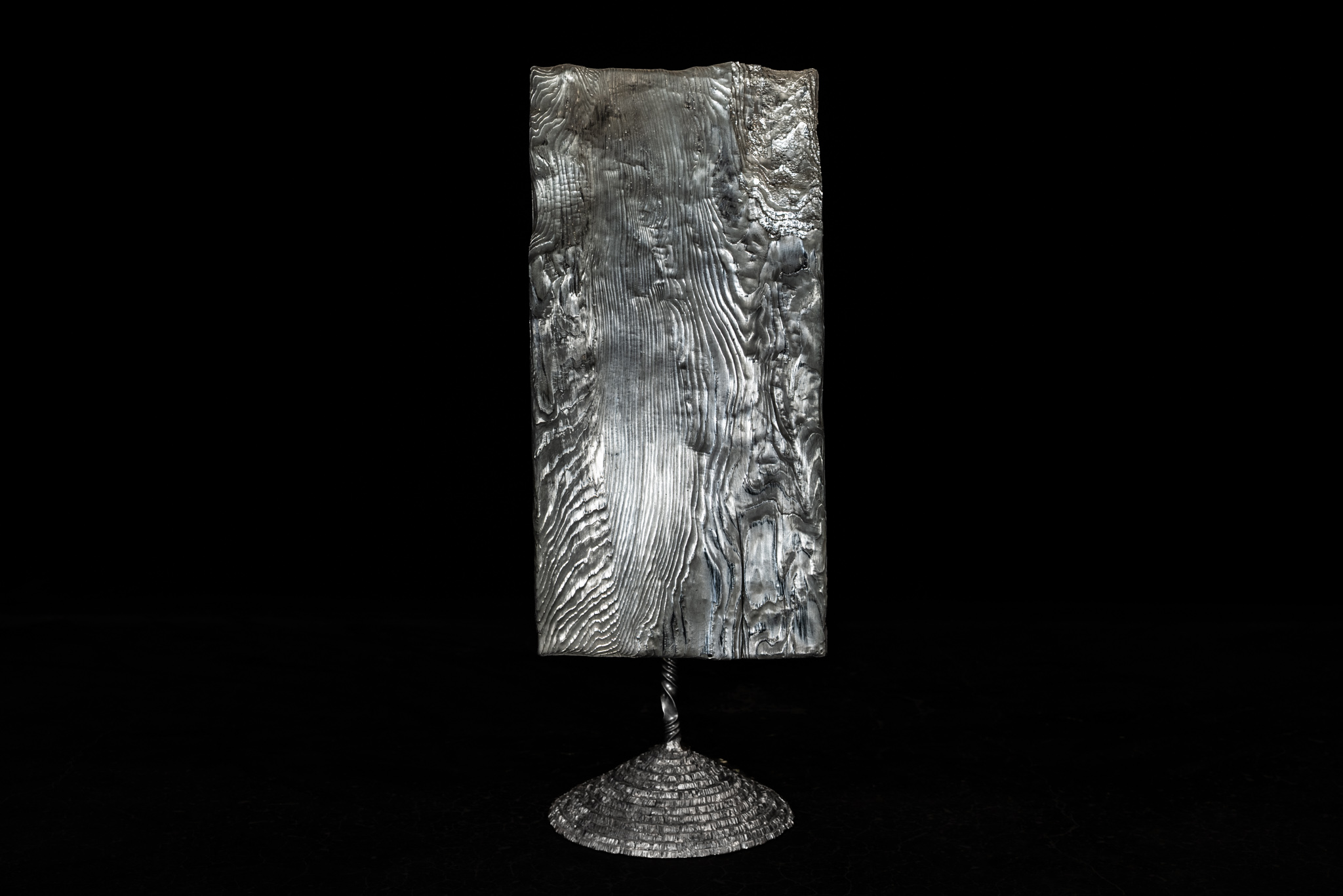
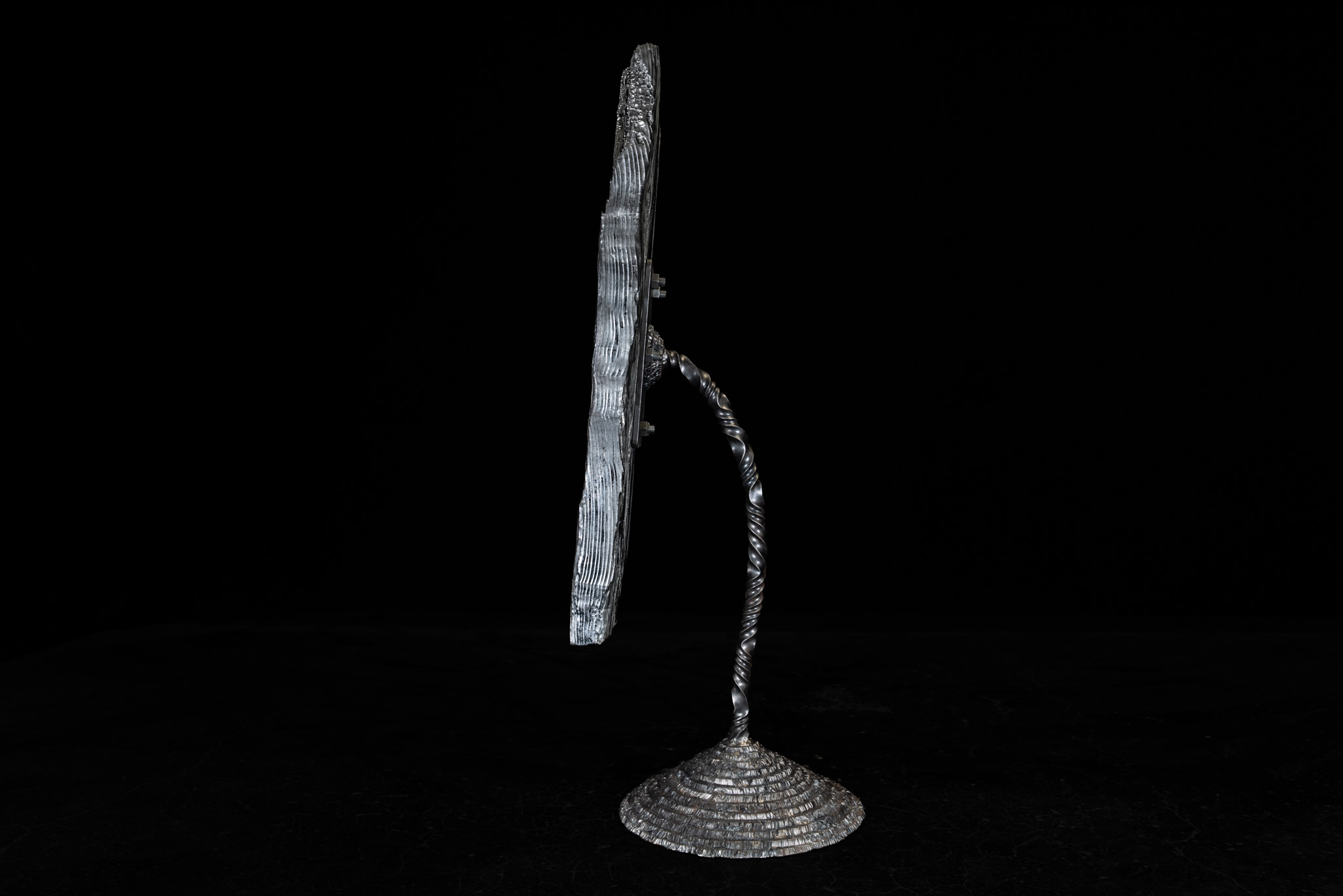
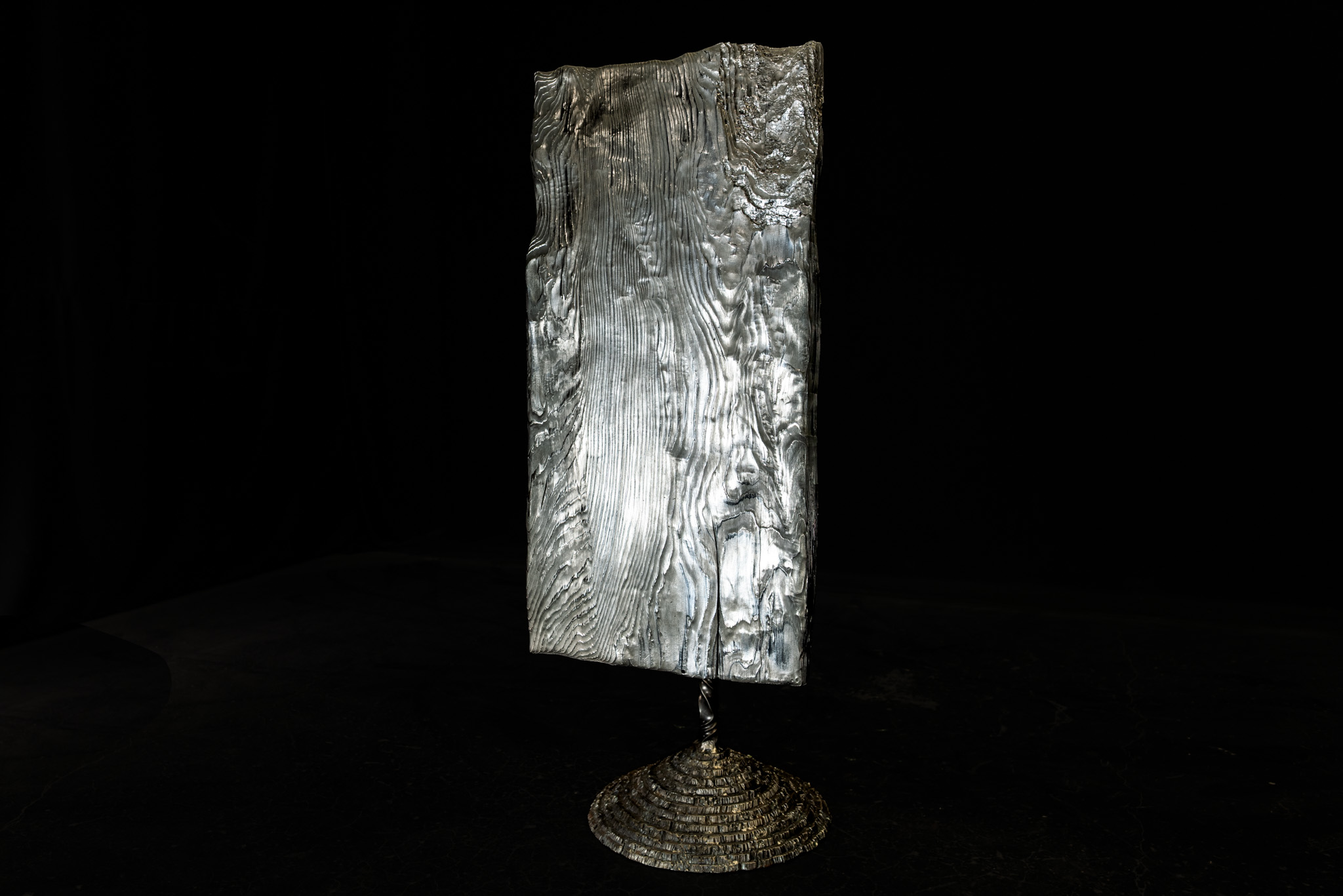
*What Remains of Me* is a self-portrait created using a “Kamiyori cedar” (unearthed from Mount Chokai) that is over 2,500 years old, intended to confront the void.
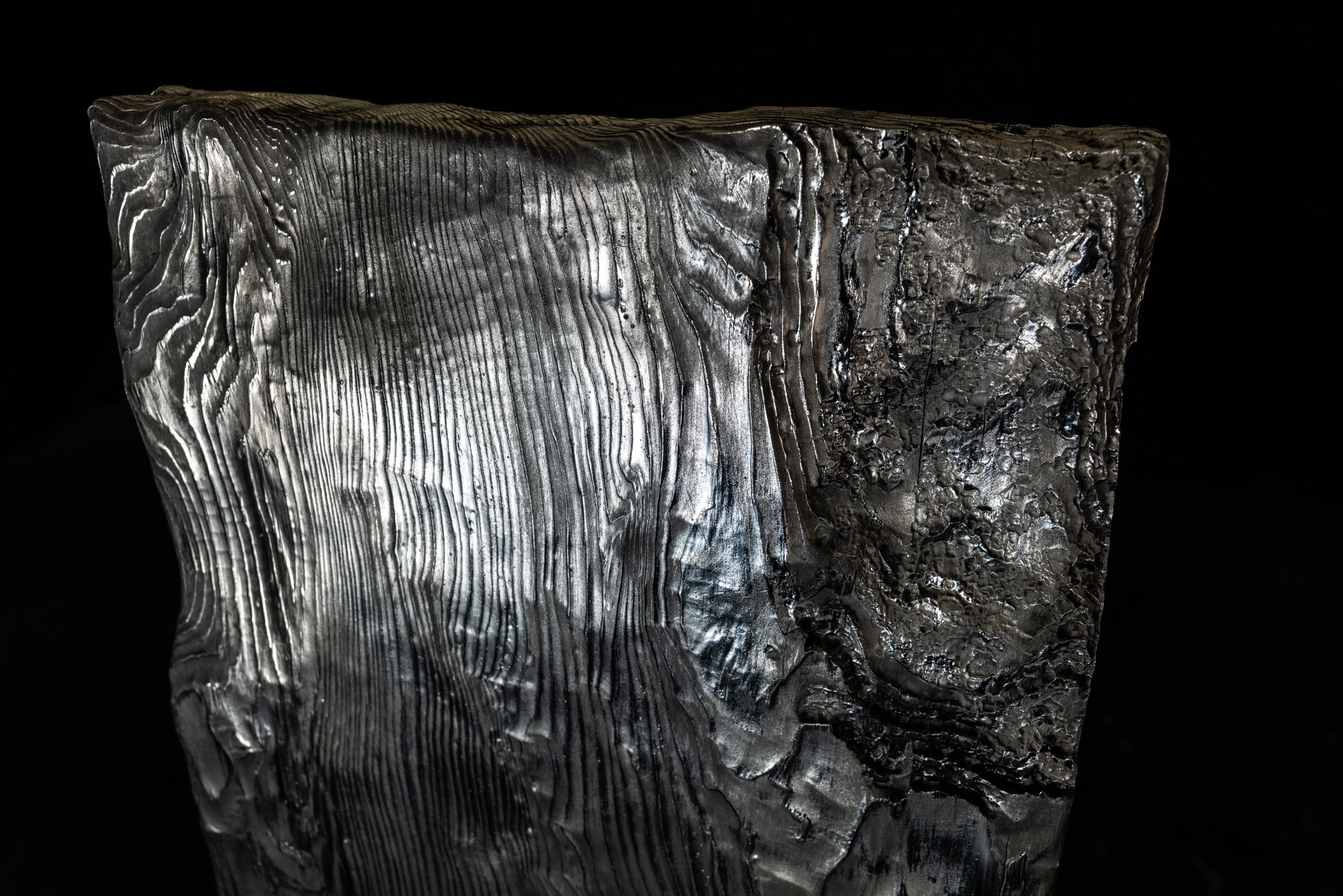
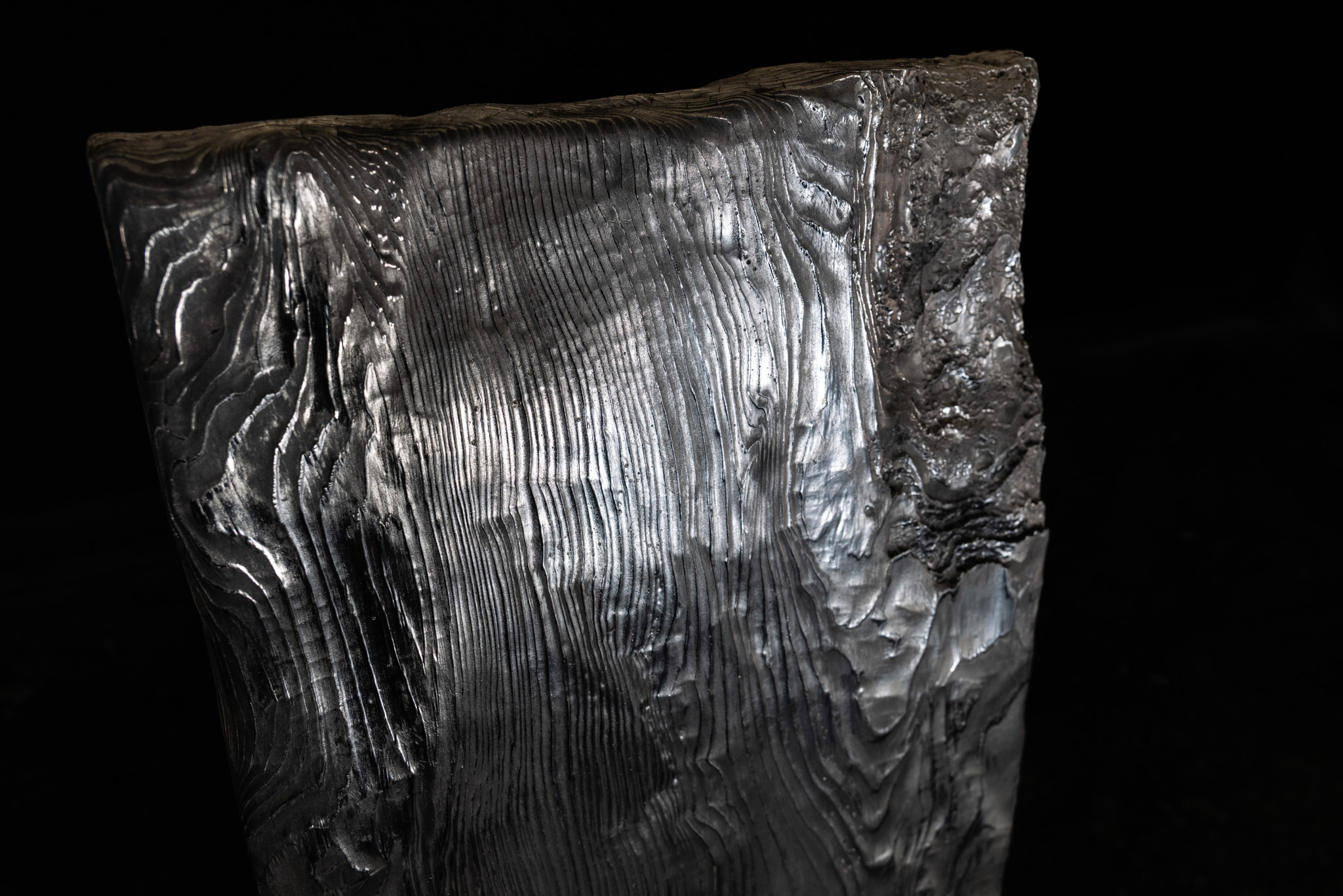
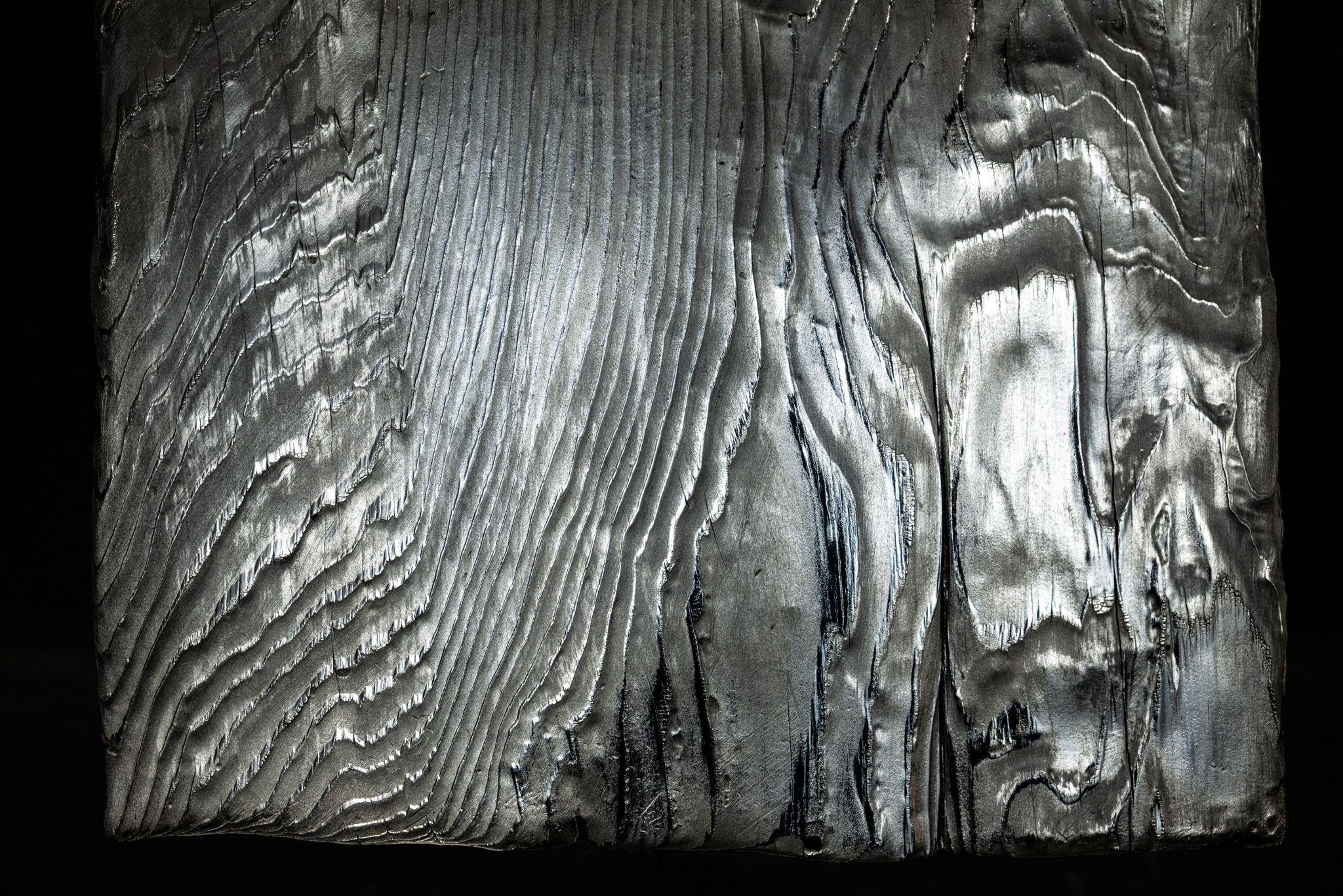
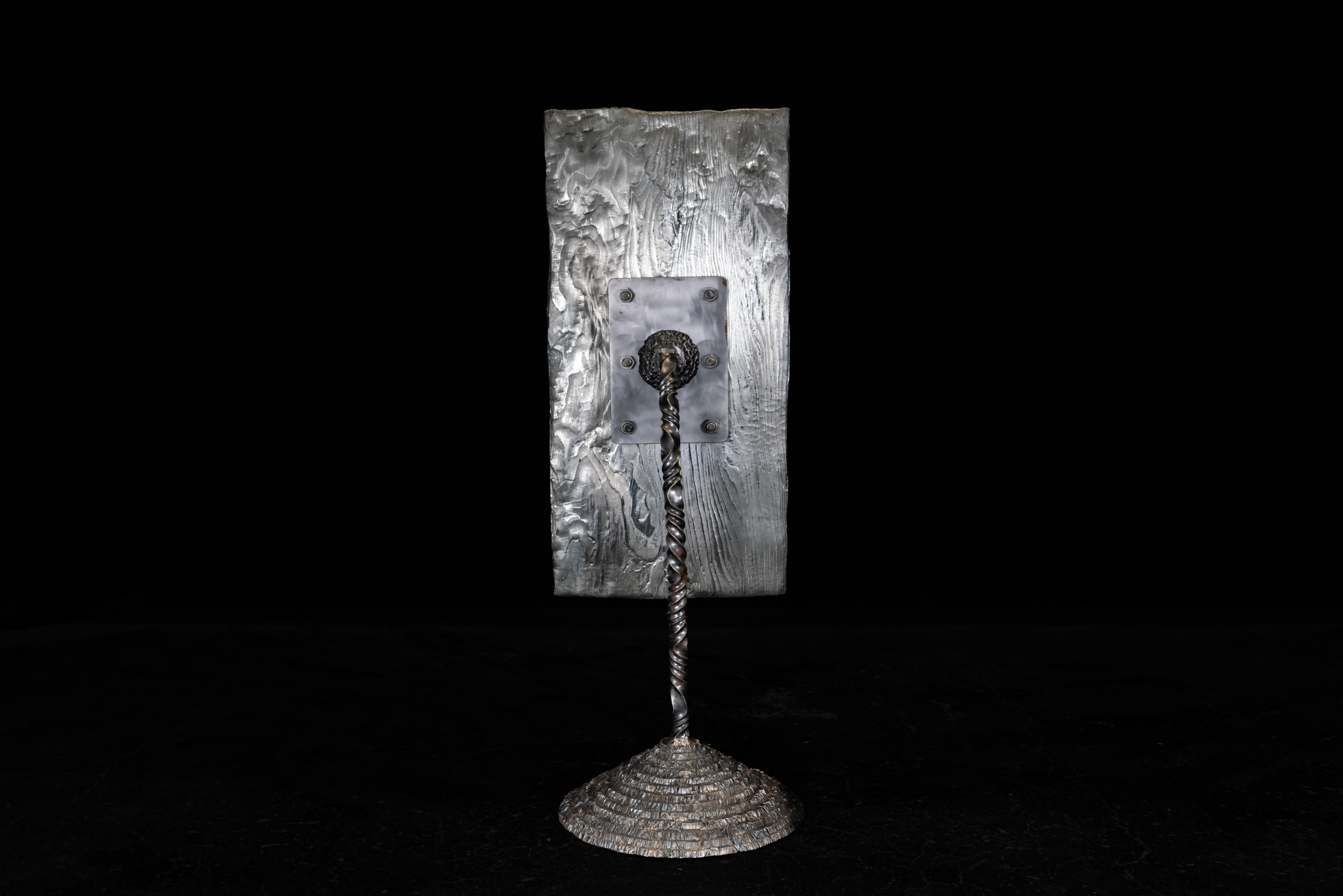
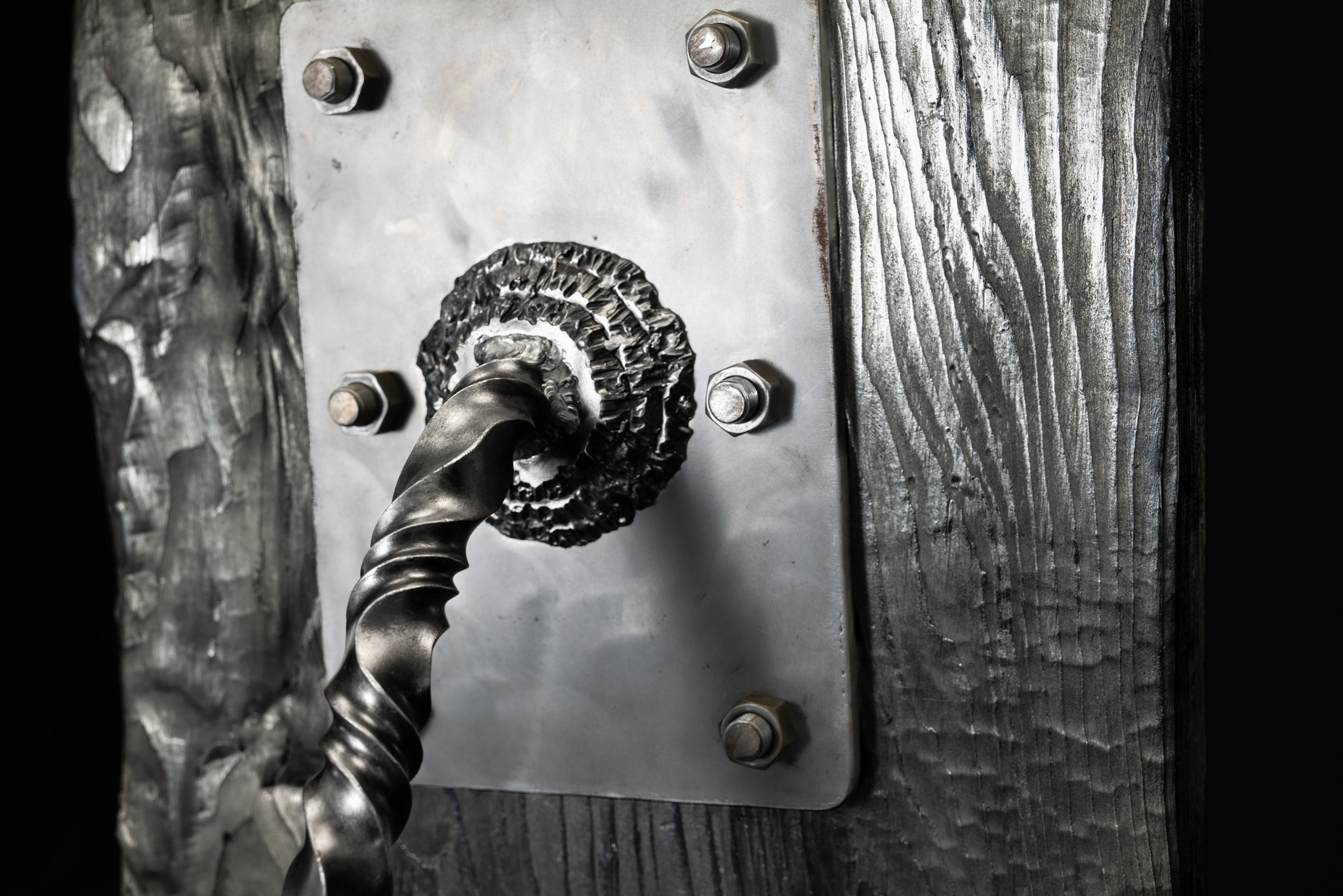
The entire surface of the cedar—which had spent many years underground—was charred to bring out its knots, grain, and cracks. A special coating composed primarily of real silver was then applied over it. Rather than filling in the wood’s pores, the process was left entirely to the material itself to determine how the silver would be absorbed and what color it would take on.
For this reason, the silver does not form a uniform coating over the wood. Areas where it sinks deeply, areas where it appears dull and cloudy, and areas that reflect light intensely emerge in accordance with the passage of time etched into the heart of the ancient cedar. Here, the silver does not serve to conceal the past; rather, it acts as a medium for drawing the invisible passage of time into the light.
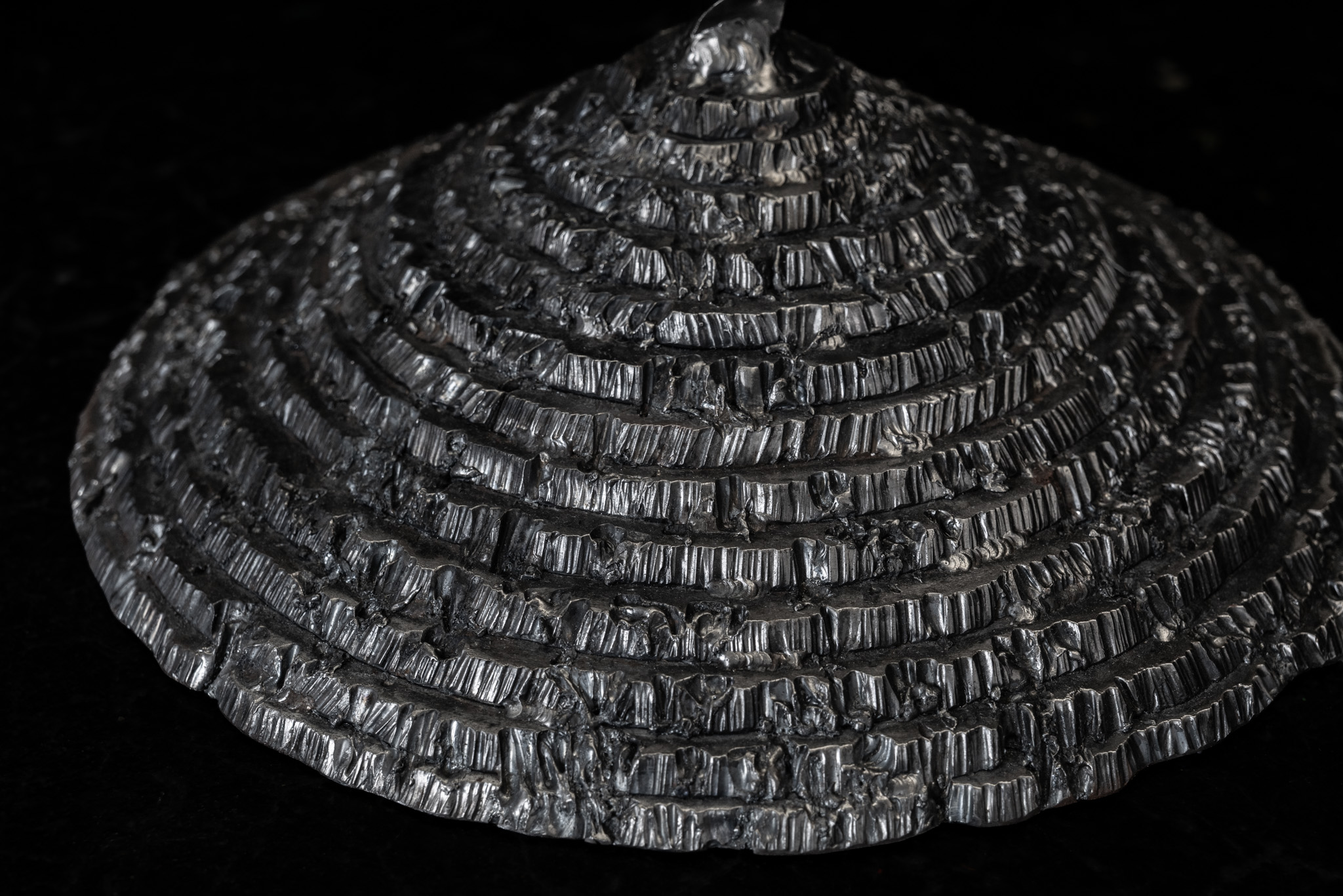
What was once a tree has passed through the darkness of the earth, been consumed by fire, been clad in silver, and now stands upright once more, supported by iron pillars and a base. Its form is at once a portrait, a monument, a vessel for the spirits, and perhaps even a nameless ritual object. There is no face on the front. All that remains are the wood grain patterns that have survived the fire and the silver light that constantly shifts depending on the viewer’s position.
In *UNDULATION*, the form of a work is not determined solely by the artist’s will. It is shaped by the time inherent in the material, the transformation wrought by fire, the traces of the hand, chance, and light. By embracing the influence of these elements, the form breaks free from the artist’s control and acquires its own character. In this work, the act of relinquishing control over the color’s development is also a surrender to the material—a small ritual for letting go of the self.
That cedar tree, having stood for more than 2,600 years, could never have known that its entire trunk would one day be covered in silver. Its unpredictable journey mirrors the fact that people cannot fully control their own lives.
This is not an offering made in hopes of salvation. It is an offering made to present the contours of one’s own existence before nothingness and to ask what remains afterward.
A wood grain that, though covered in silver, never fades. It is the trace of the “self” that remains to the very end in the face of nothingness.
The “Jindai Cedar” of Mount Chokai refers to a special type of wood—truly deserving of the name “cedar fossil”—that was buried underground by a massive eruption of Mount Chokai approximately 2,500 years ago (466 B.C.). Covered by volcanic ash and sediment, it develops a unique color and texture over time as it is gradually unearthed.
◯ Height: 1215 mm
DETAILS
JOB INFORMATION
VOTIVE
What Remains of Me