VOTIVE
THE ARTWORK
STATEMENT
About the Work
An Offering to the Void
Self-Portrait
Self-Portraiter
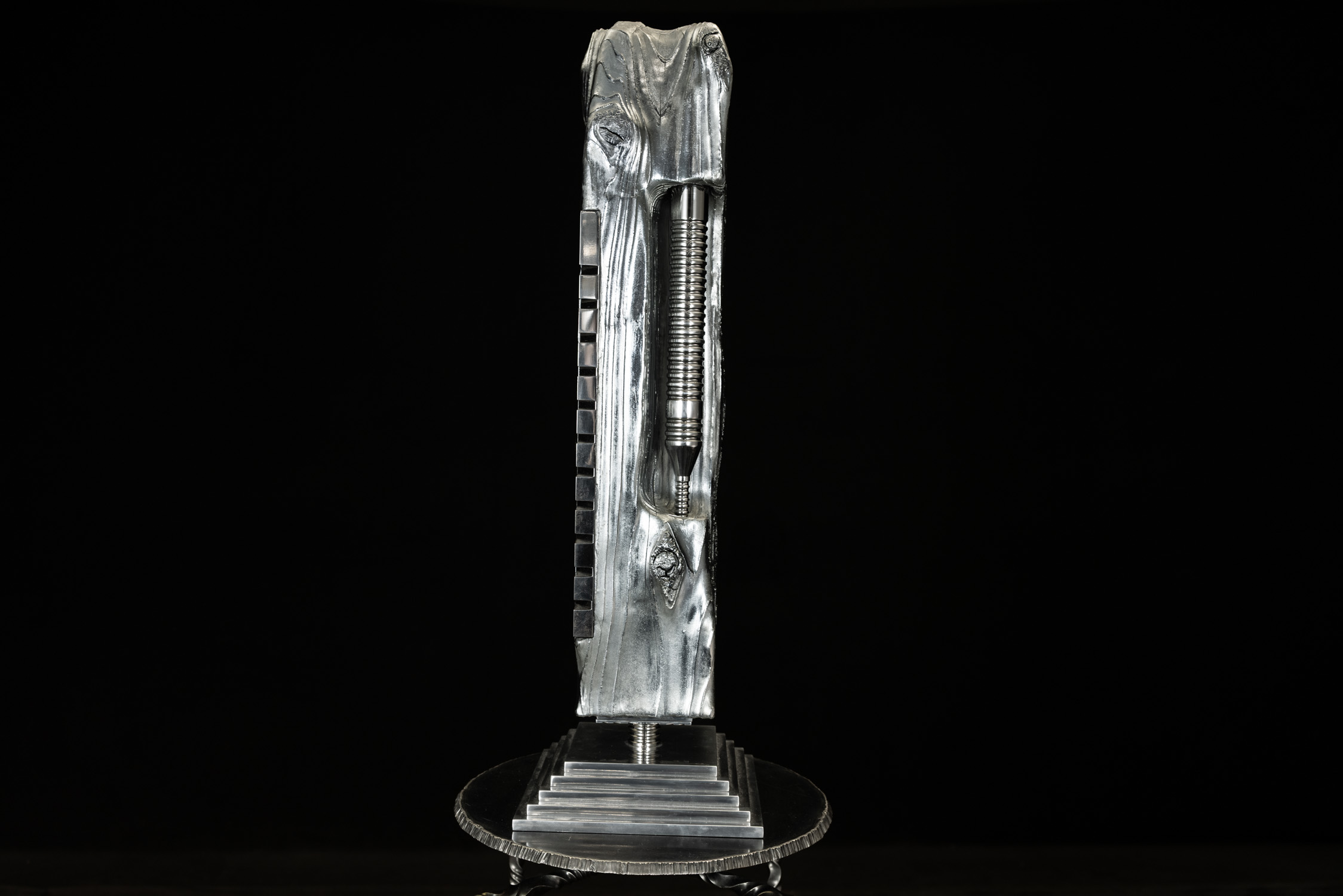
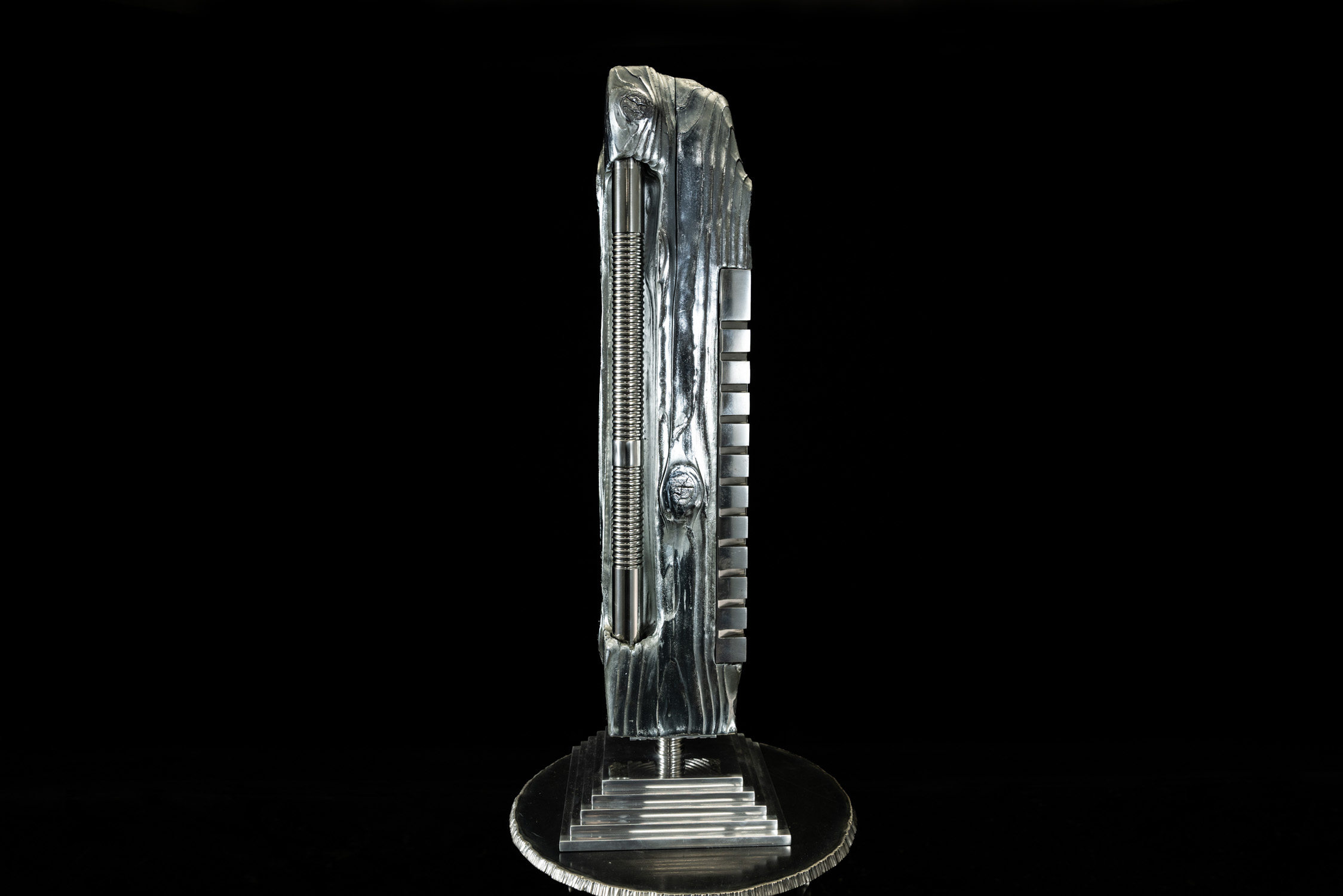
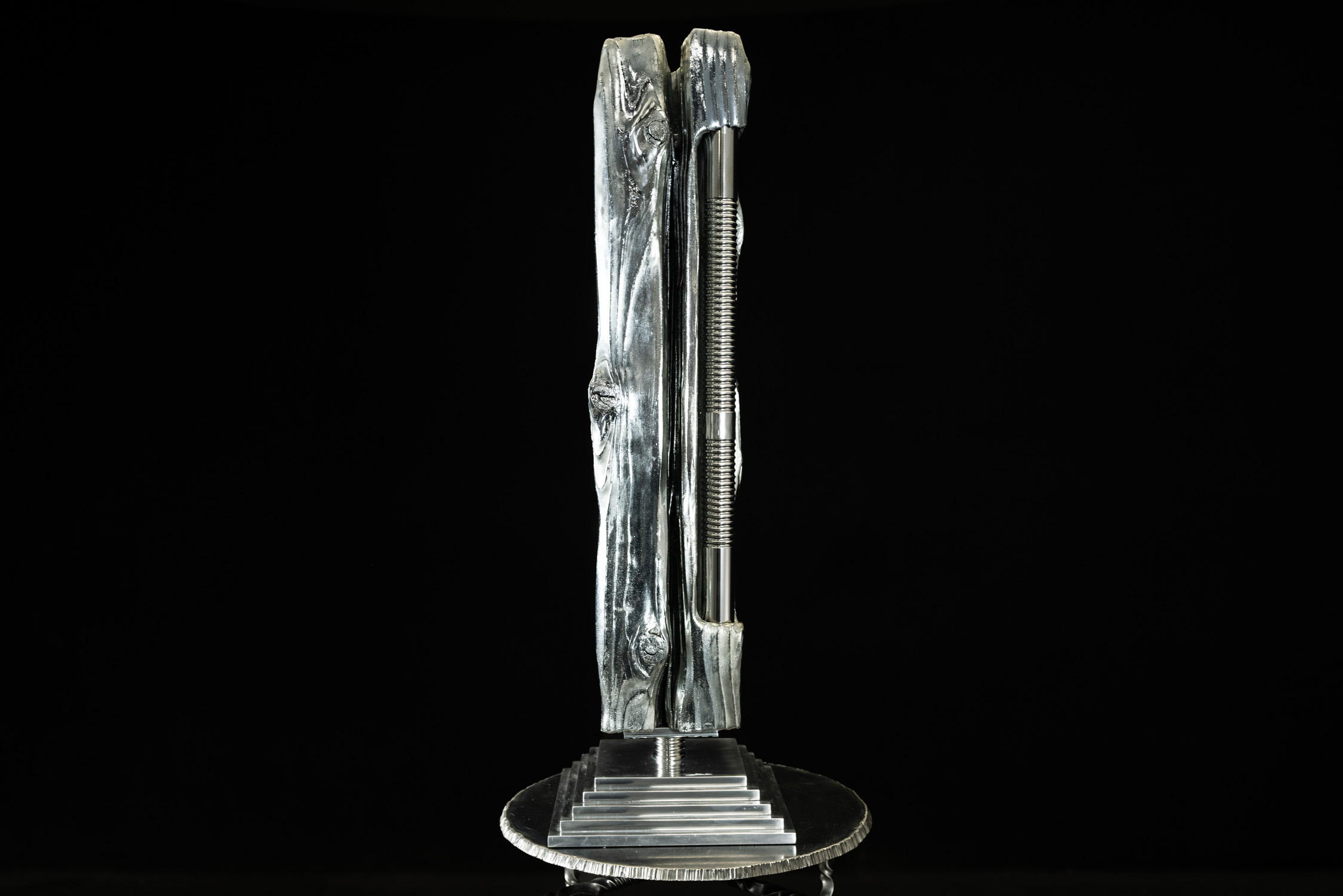
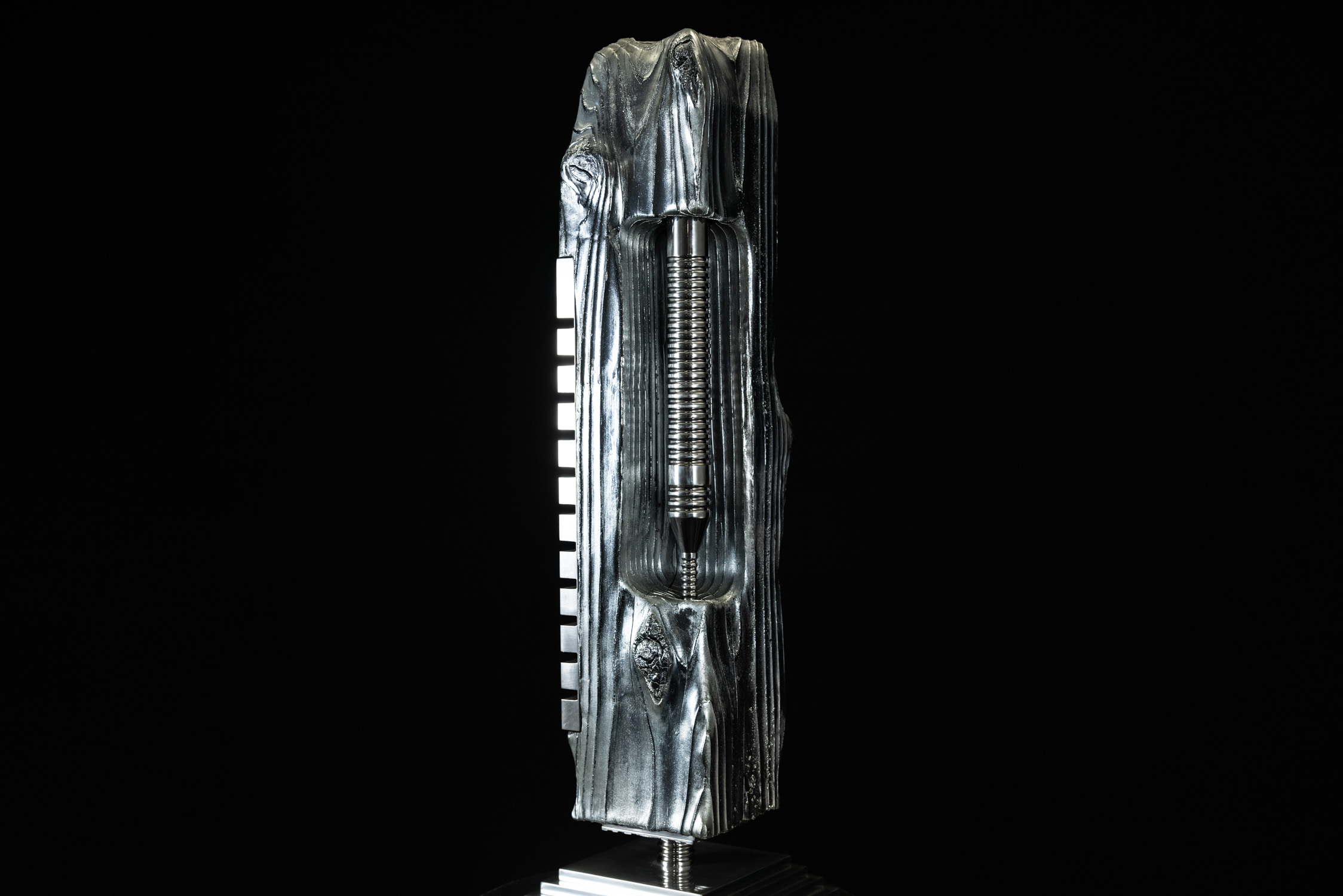
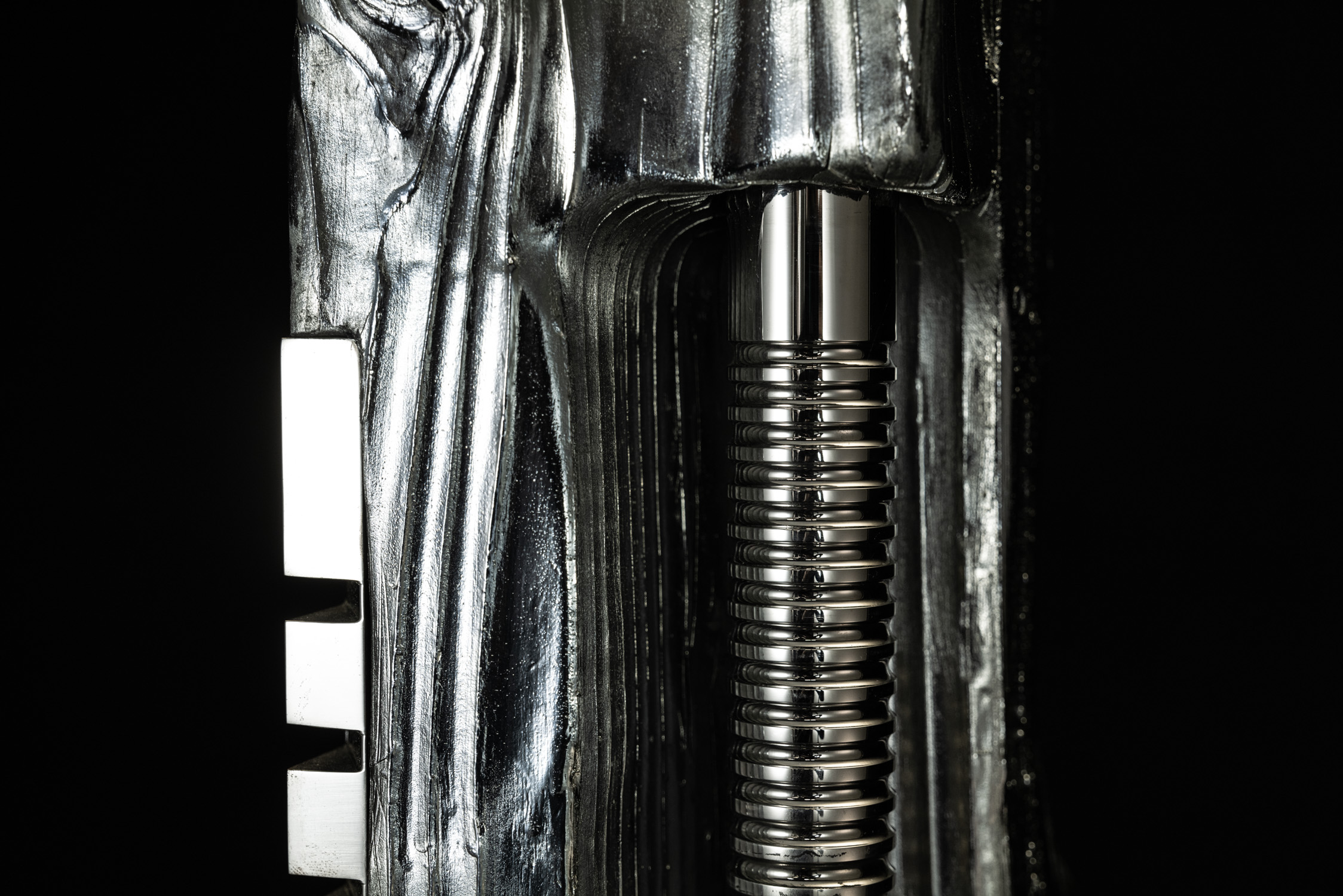
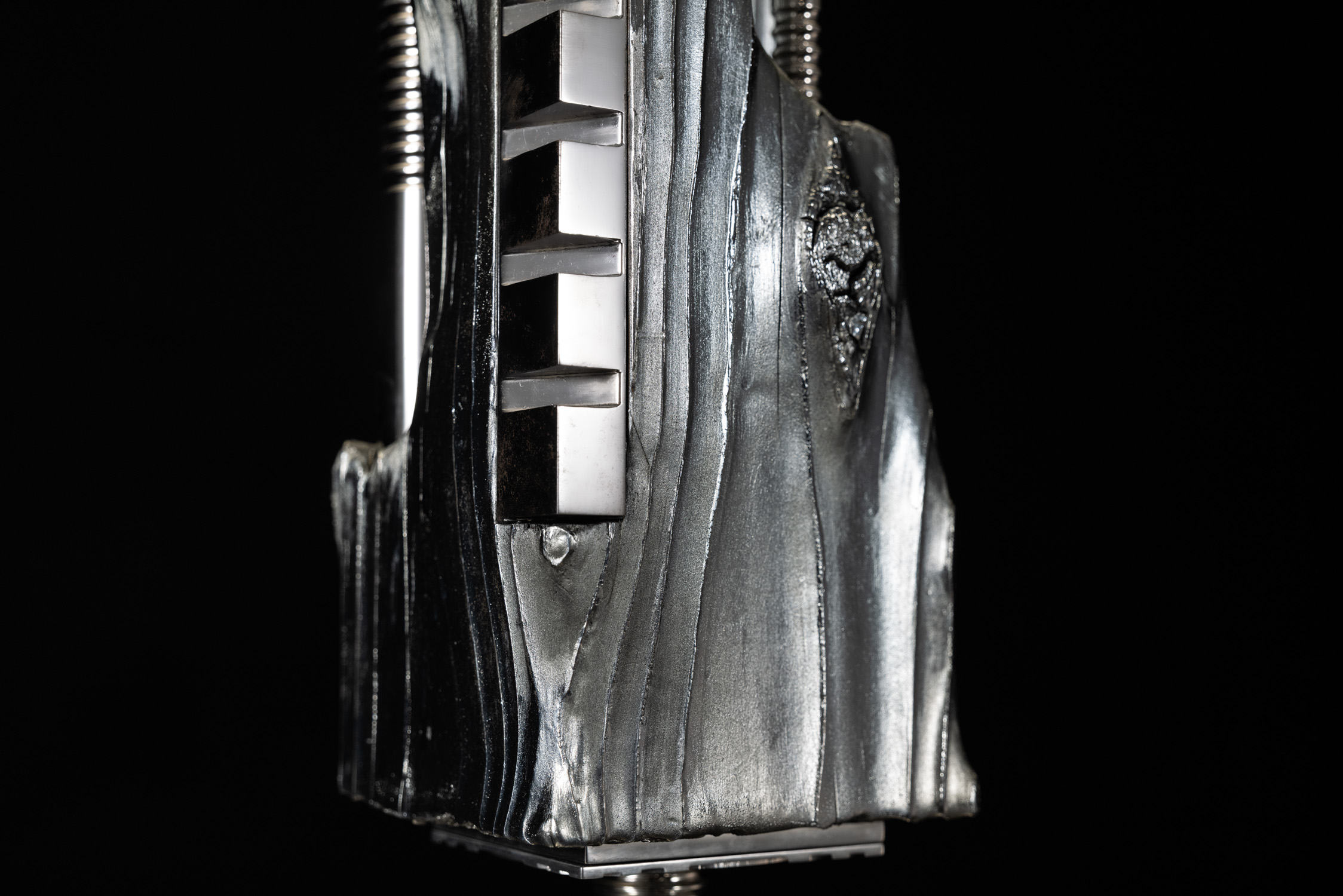
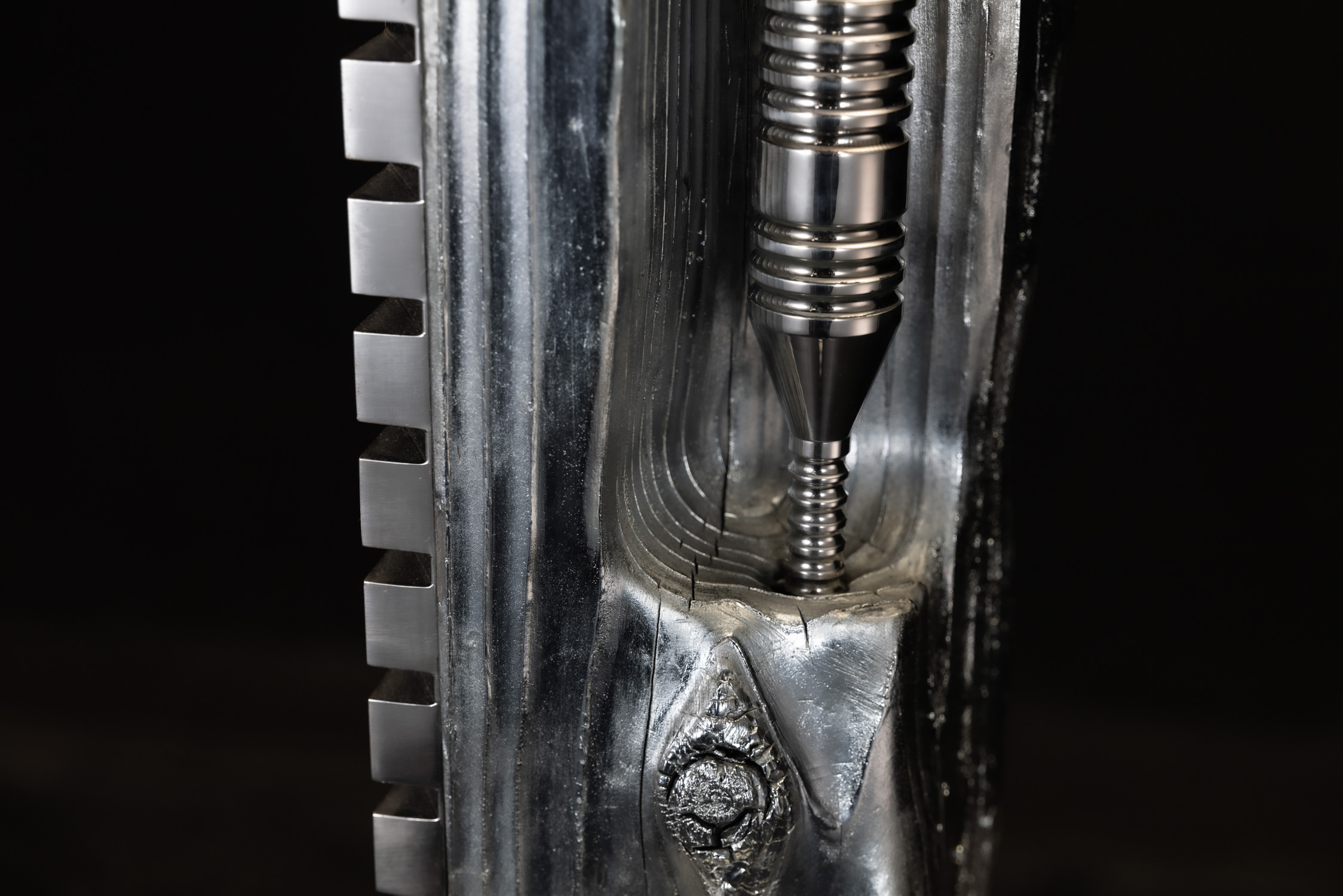
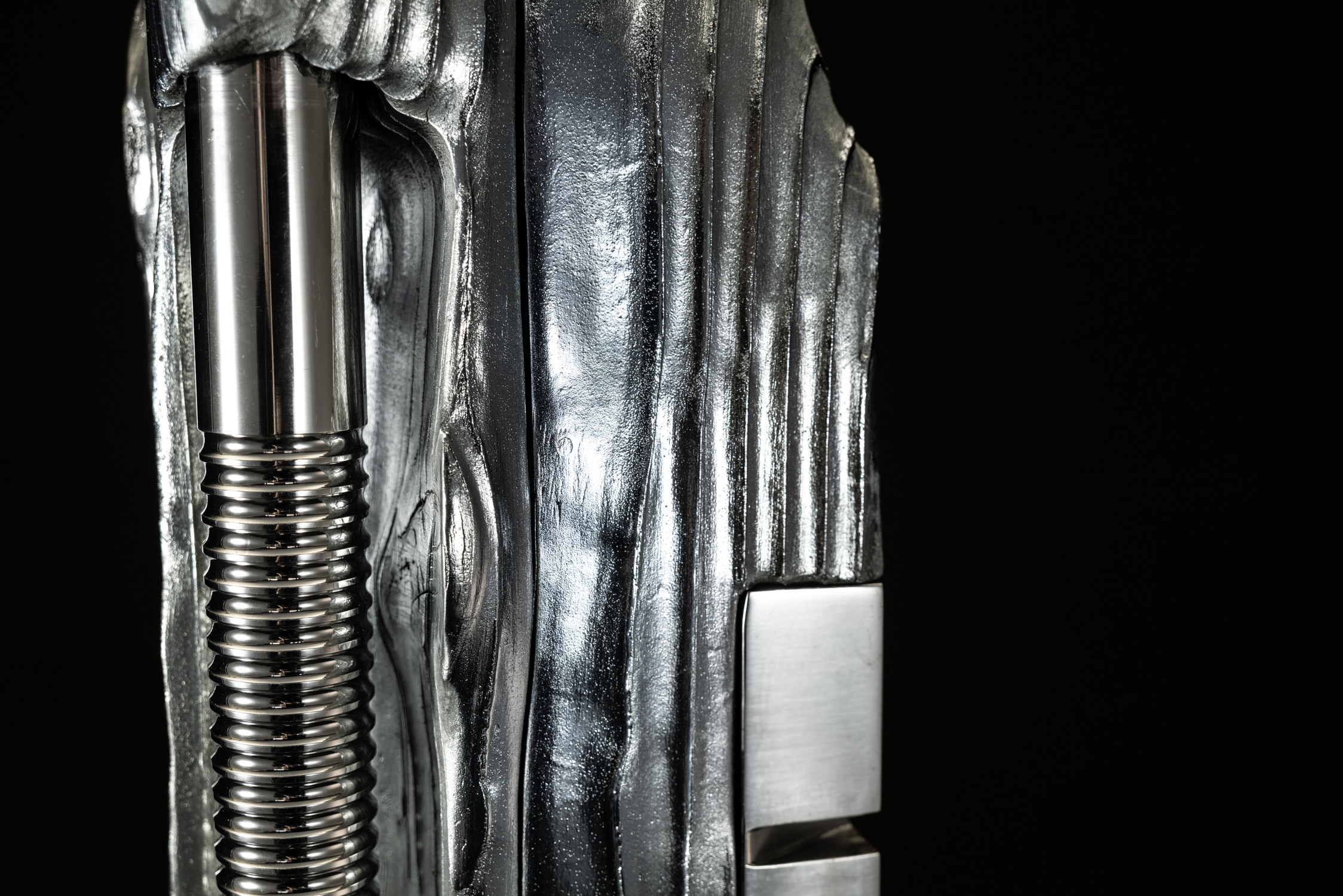
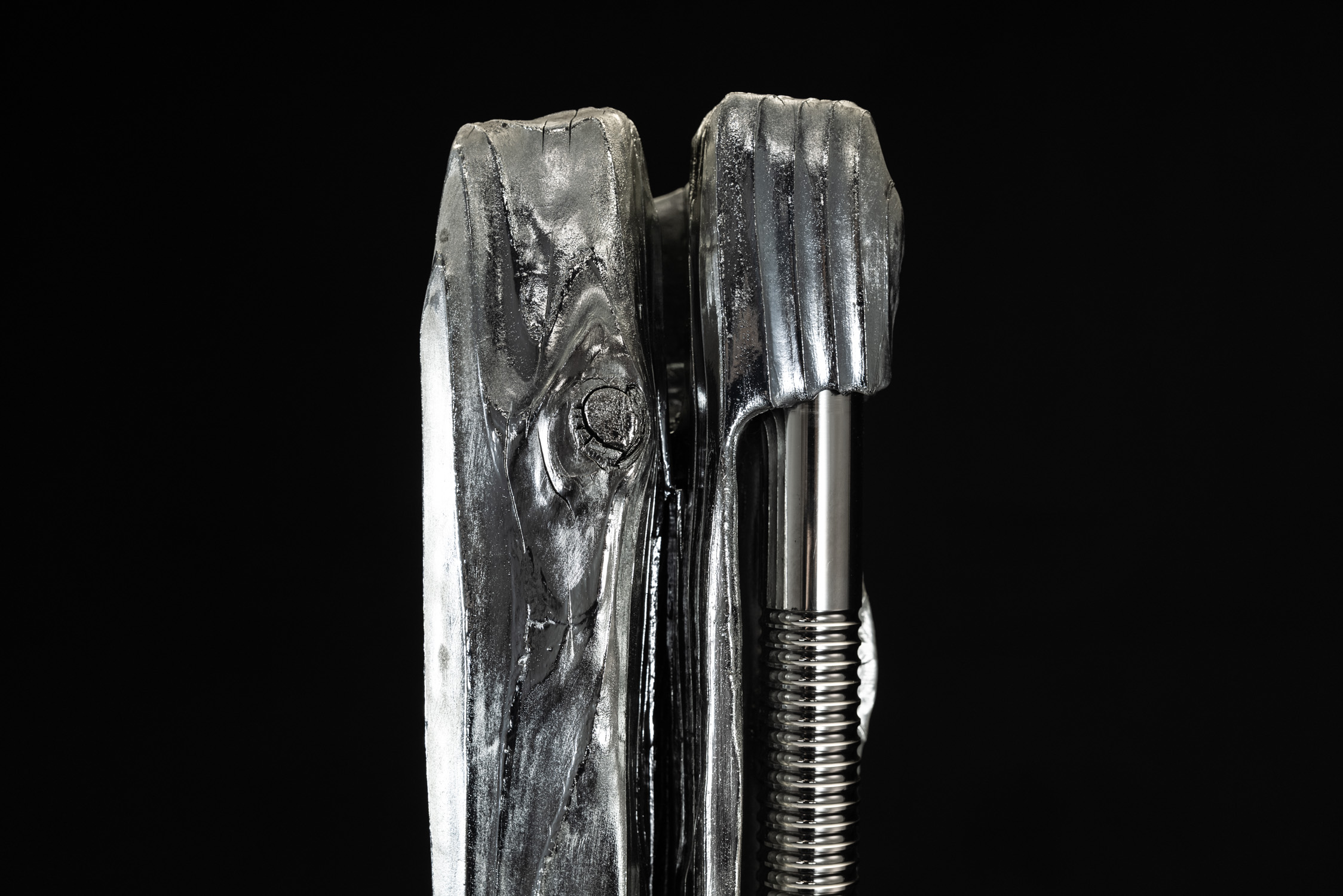
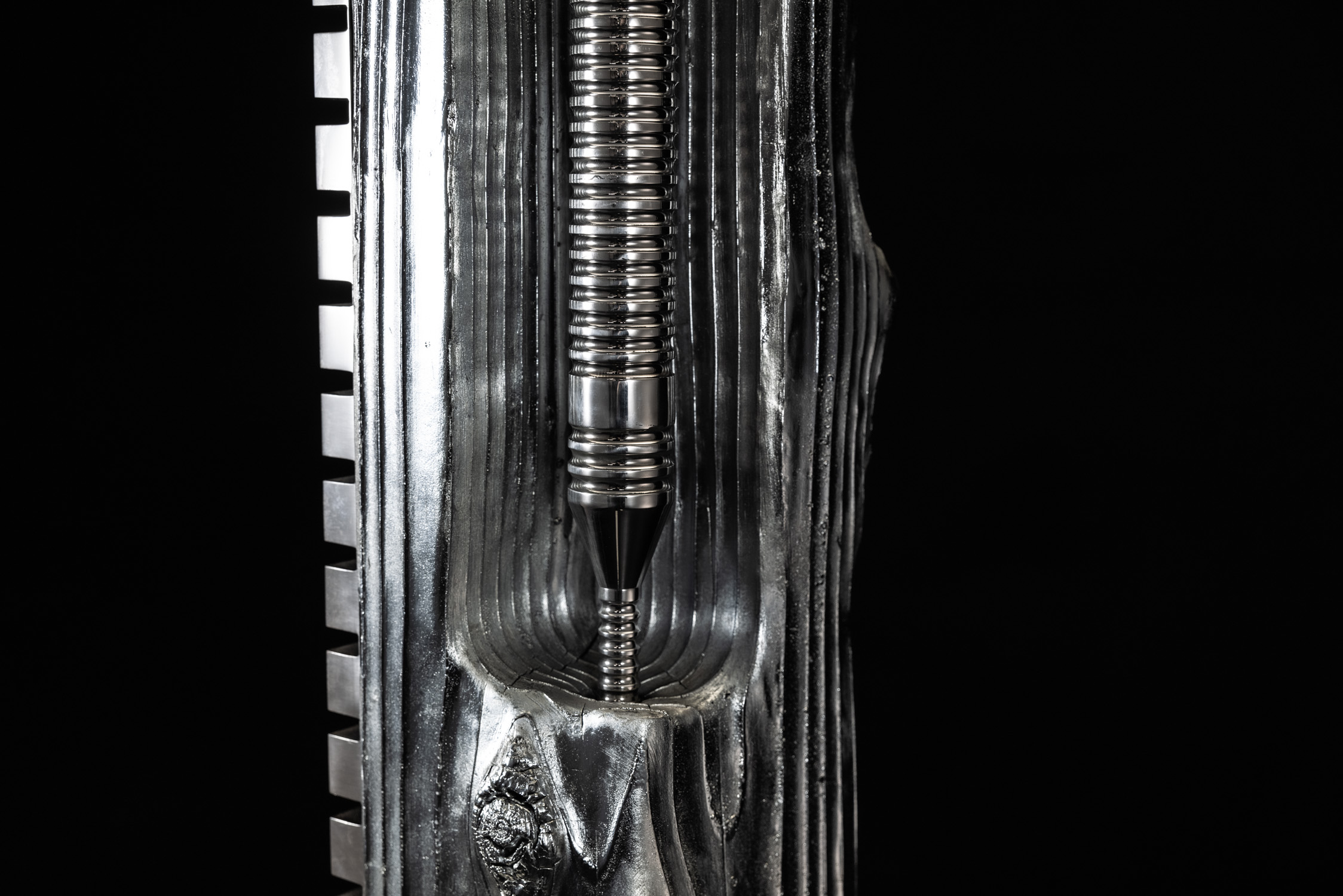
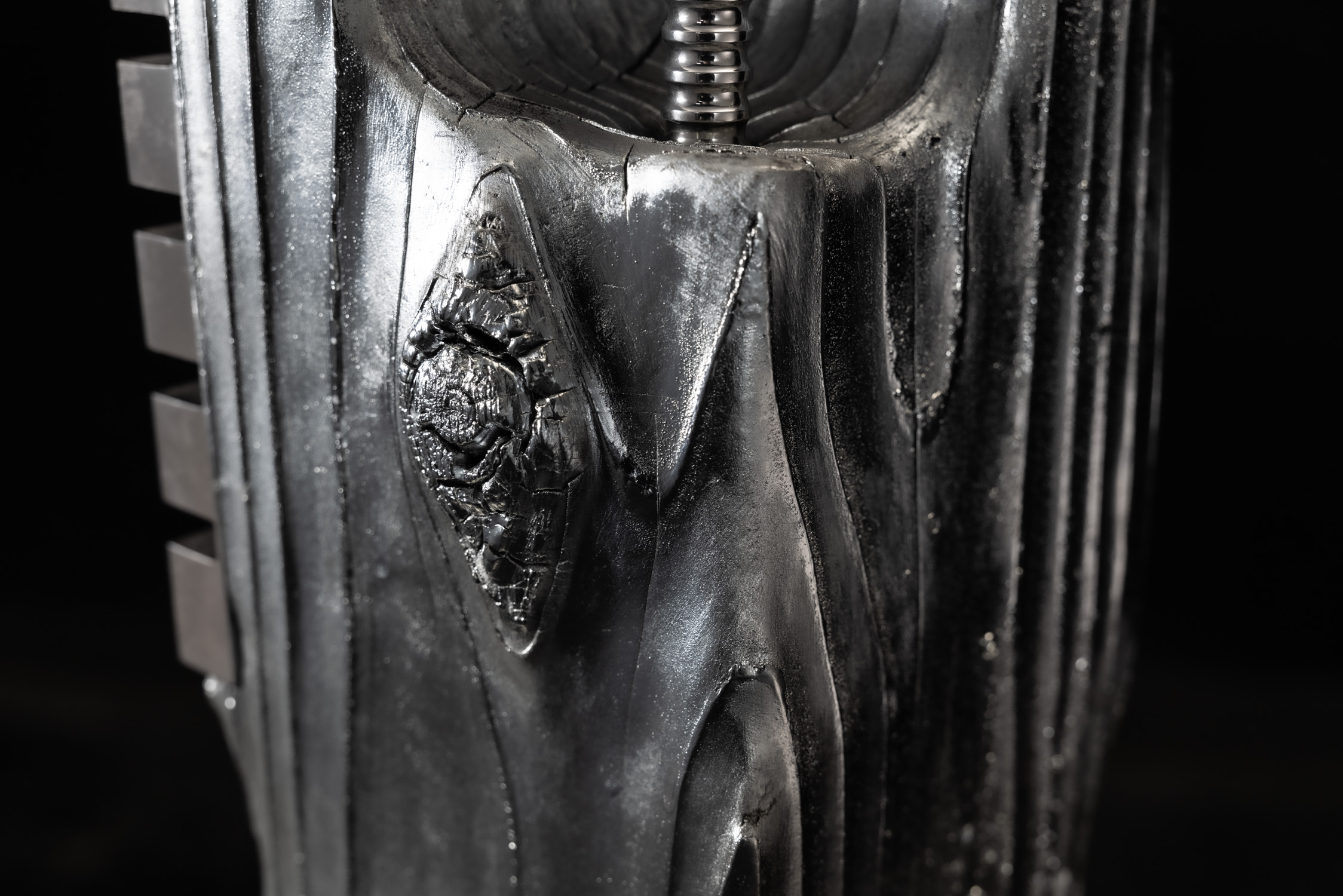
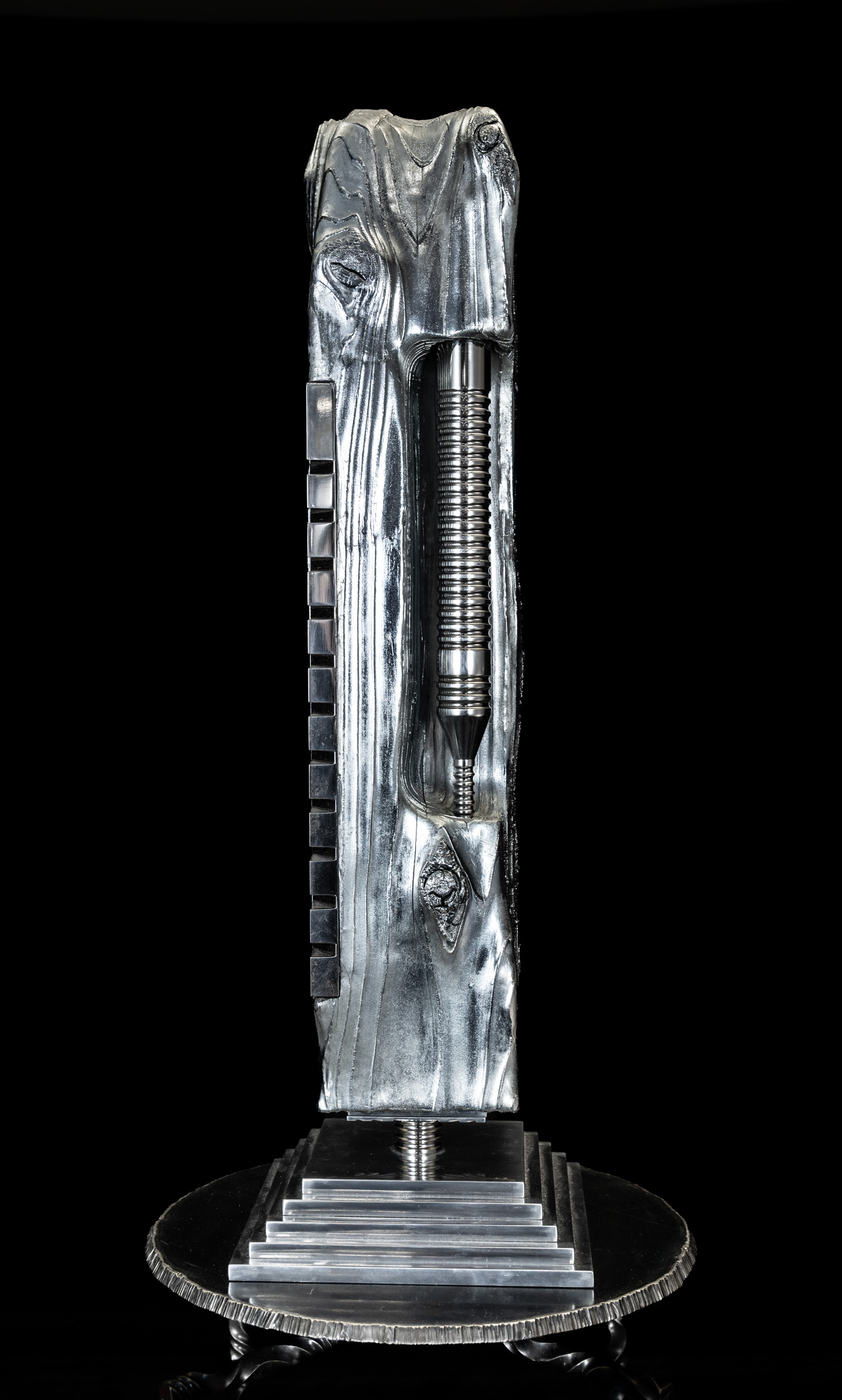
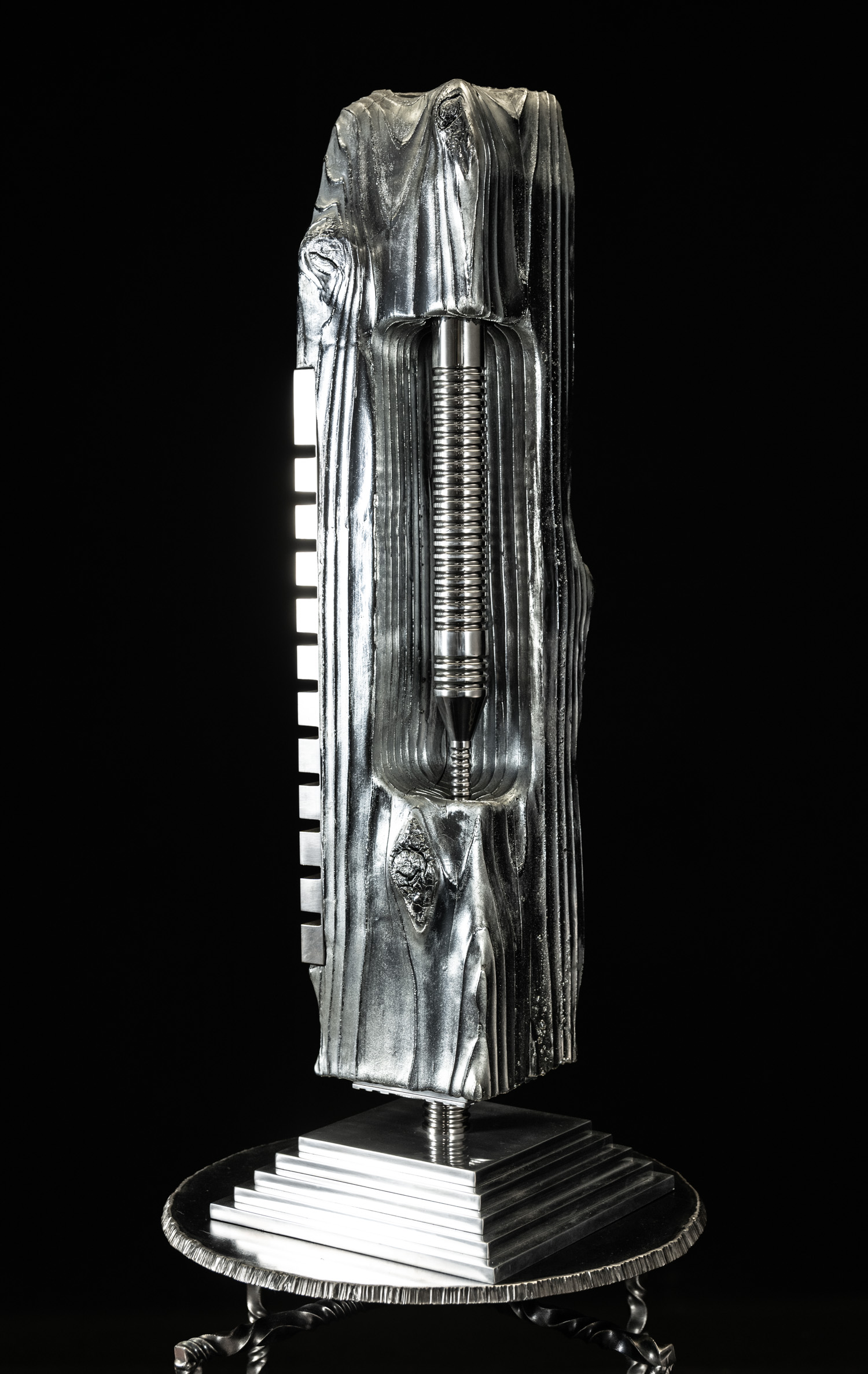
This work began with a single cedar square timber. I applied fire to its surface, heat-treated it, carved it, planed it, and reshaped it. The once-straight cedar transformed while revealing the growth rings carved into its interior, eventually taking the form of a figure embracing metal at its core.Wood is something that once lived. Metal is something that has never lived. I united these two materials, each with its own distinct sense of time, within a single form. Finally, I applied a coating containing real silver to the surface of the cedar.
I did not fully control the silver’s appearance. In the tightly grained sections, the silver reflected light intensely, while in the softer areas, the wood absorbed the paint, dampening its luster. Though it was all from the same piece of wood, some areas shone brightly, others appeared dull and subdued, and still others took on a quiet, hazy sheen.
It wasn’t me who created that difference. It was the time the cedar tree had lived through. Inside a single tree, time that had previously been invisible from the outside has accumulated. The scars, the hardness, the softness, the knots, and the growth rings—all are traces of life. By wrapping it in silver, that invisible time emerges onto the surface. In it, I see myself.
During the summer of my sophomore year of high school, I read Hideo Nakai’s *Offering to the Void*. That encounter with the book left the word “void” deeply imprinted on my mind. No matter how hard people strive to build, accumulate, and protect something, it can all be lost in an instant.Time, memory, love, the body, work—even existence itself—is not eternal. At seventeen, I didn’t understand this as a matter of logic. Yet that sense of “nothingness” has never faded from my life since then. I wasn’t afraid of it. Nor was I trying to run away from it. It was simply always there, somewhere.
For a long time, I may have thought of nothingness as something that existed outside of myself—something that would one day take away what humans have built, something that would shatter the tangible and reduce all the time we’ve accumulated to nothing. However, after living for more than sixty years and confronting nothingness anew through the creation of *UNDULATION*, my understanding of it has changed dramatically. Nothingness was not something that came from the outside. Nothingness was contained within existence from the very beginning. And then, I realized something even beyond that.
The void that I have been contemplating for over forty years was also within me.
Based on this realization,
"
" "
" "Redemption"
These three works were created.
"Purity" is the self that did not yet know the true nature of nothingness.
"Submission" is the self that has lived by accepting what cannot be resisted.
"Redemption" is the self that, at the end of a long life, attempts to look even into the nothingness within itself.
They are not three different people. They are all me. The only thing that differs is time.
STATEMENT
Self-Image
And this “Self-Image” lies at the very center of those three times. This is not a fourth stage following “Purity of Heart,” “Obbedience,” and “Redemption.” It is the image of a single human being who has embraced all three “selves” within.I named this work “Self-Portrait” not because I wanted to create a self-portrait that reproduced my facial features. What is depicted here is not the “me” as an outward appearance. It is the structure of my existence — an existence that has lived by layering time like a tree, becoming scarred and hardened while retaining soft parts, sometimes reflecting light and sometimes absorbing it.
Therefore, this is not a portrait . Rather, it is a self-portrait as a structure of existence. The metal embedded in the center exists like a core piercing through the body . Cedar and metal. Organic and inorganic. That which is alive and that which has never been alive. The soft and the hard.Things that change and things that do not change easily. That structure—which simultaneously embraces opposing elements within itself—is also close to who I am. Human beings are not made up of just one trait. There is purity, and there is resignation. There is a part of me that obeys, and a part that resists. There is a part of me that loves, and a part that seeks to destroy. Hope and nothingness do not necessarily exist in separate places. They coexist within the same person.
When I thought about it that way, the meaning of the phrase “an offering to nothingness” changed. Perhaps I had once believed I was offering my work as a sacrifice to something vast—nothingness. But now I see it differently. If nothingness exists within me as well, then what I must ultimately offer is not just my work— it is myself.
I am the offering presented to nothingness; I am also the one making that offering; and even that nothingness itself exists within me. There, the boundaries between the one who offers, the thing offered, and the recipient of the offering become blurred. That is the “nothingness” I have arrived at in my present state.
It has been roughly forty-five years since the summer of my sophomore year of high school. I have lived my life carrying a single word with me. And after all this time, what finally emerged on the other side of that word was not nothingness itself— it was myself. That is why I have titled this work *An Offering to Nothingness—Self-Portrait *.
This work is not intended to explain nothingness. Nor is it intended to overcome nothingness . It is a portrait of myself—the result of a single person who, over the course of forty-five years, continued to gaze upon nothingness and ultimately arrived at his true self .
◯ Height: 735 mm
DETAILS
JOB INFORMATION
VOTIVE
An Offering to the Void