VOTIVE
THE ARTWORK
STATEMENT
About the Work
An Offering to the Void
— Purity, Obedience, Redemption —
During the summer of my sophomore year of high school, I read Hideo Nakai’s novel *Offering to Nothingness*.For me at the time, encountering that book had a profound impact. The “nihilism” I perceived in it was neither evil nor demonic. Rather, it was the uncertainty inherent in existence itself—the realization that no matter how hard people strive to build, protect, and accumulate something, at any moment, it could be lost or crumble away due to some force beyond their control.
Neither effort, nor memories, nor love, nor time are guaranteed to last forever.
At seventeen, I didn’t fully understand that. But the word “nihilism” has never left my mind since then.
It wasn't that I was afraid. It wasn't that I was trying to run away. It was just always there.
Casting a shadow over a corner of my life—sometimes gazing at me from afar, sometimes appearing right before my eyes—the presence of “nothingness” has remained within me for over forty years.And over the past few years, as I began working on *UNDULATION* and once again came face to face with nothingness, I realized one thing: Nothingness is not some entity that comes from afar to destroy what we have built. It has existed within our very lives from the very beginning. And as I continued to reflect on this, I arrived at another realization.
The void I had been staring at for so long was also within my own heart.
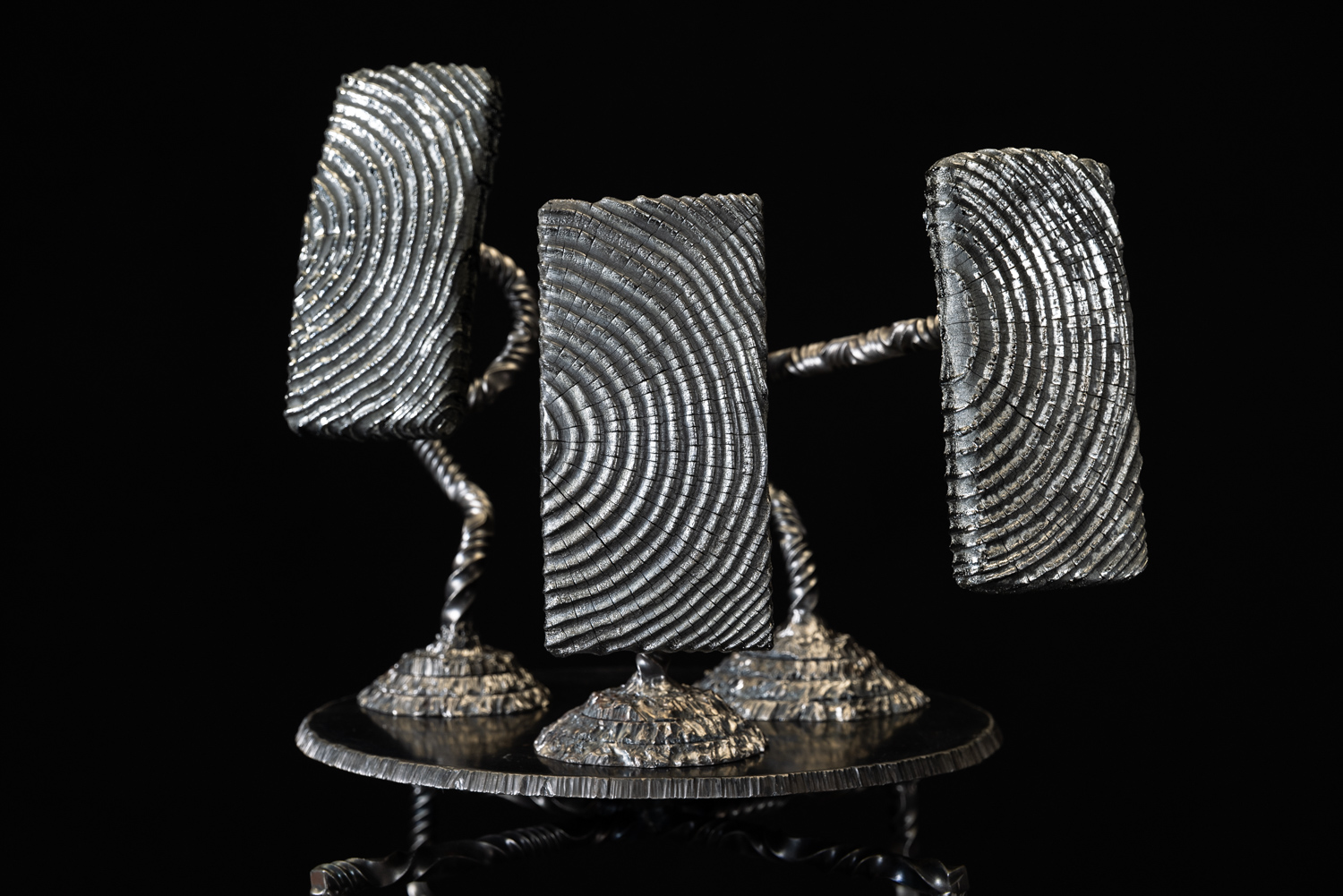
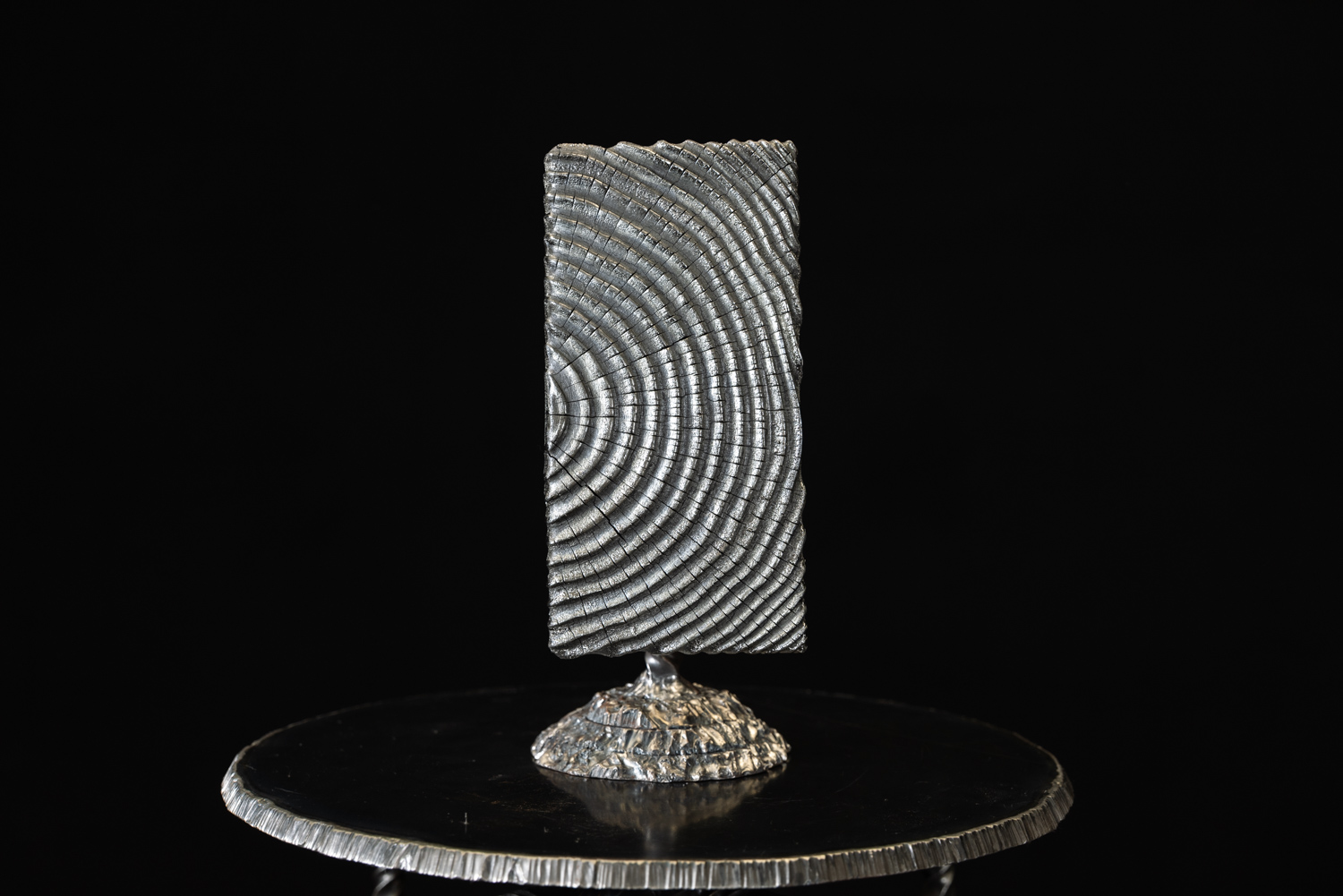
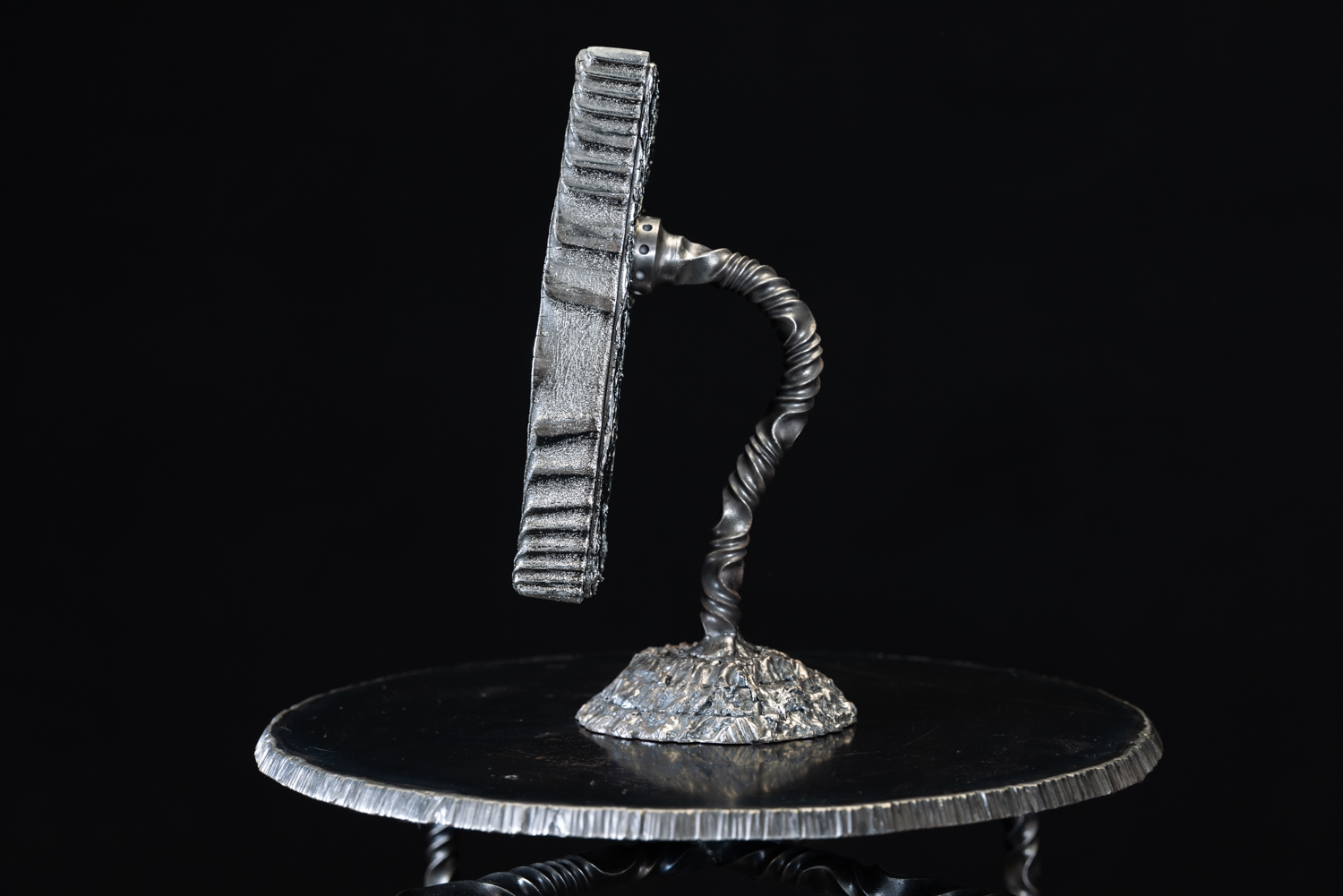
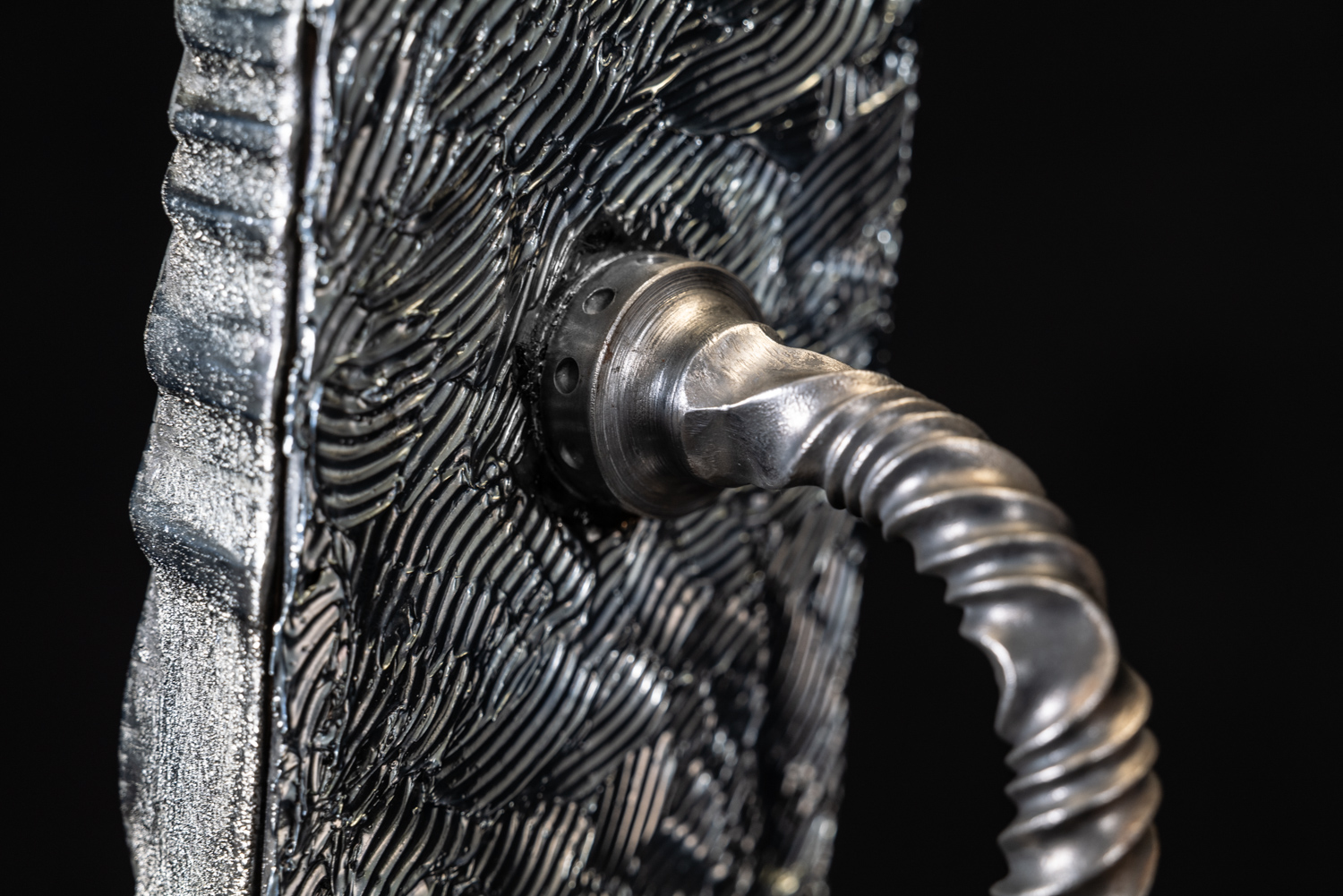
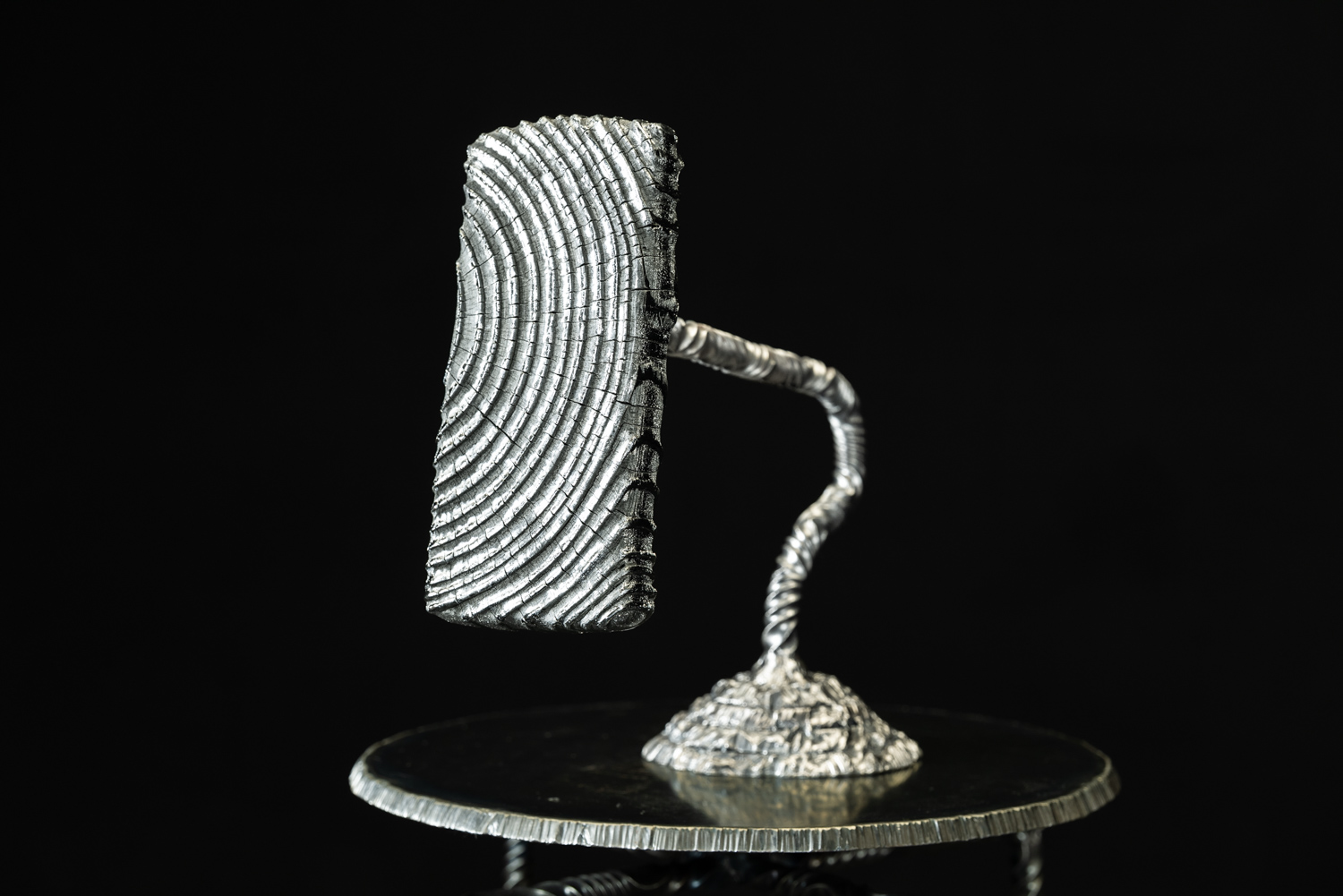
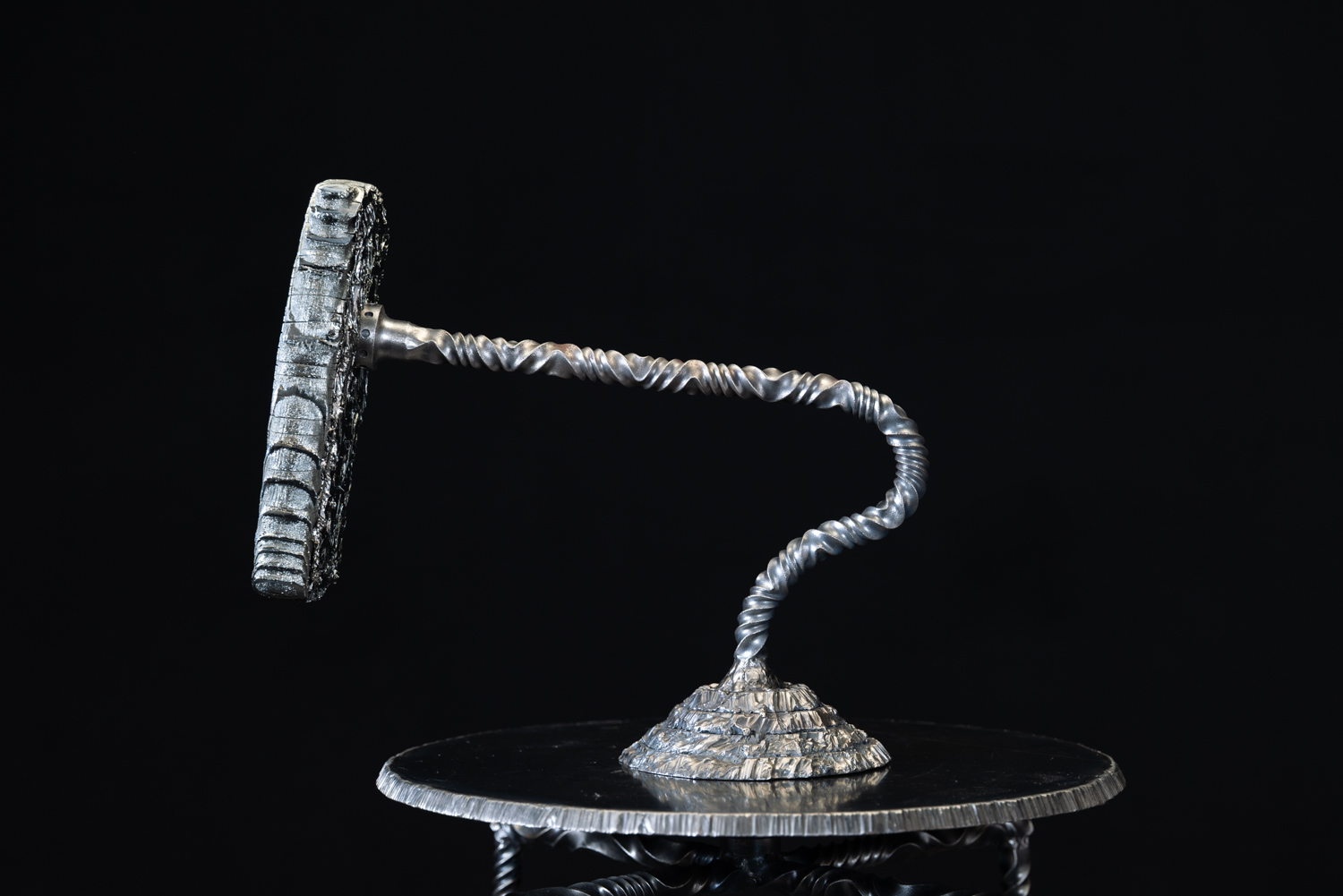
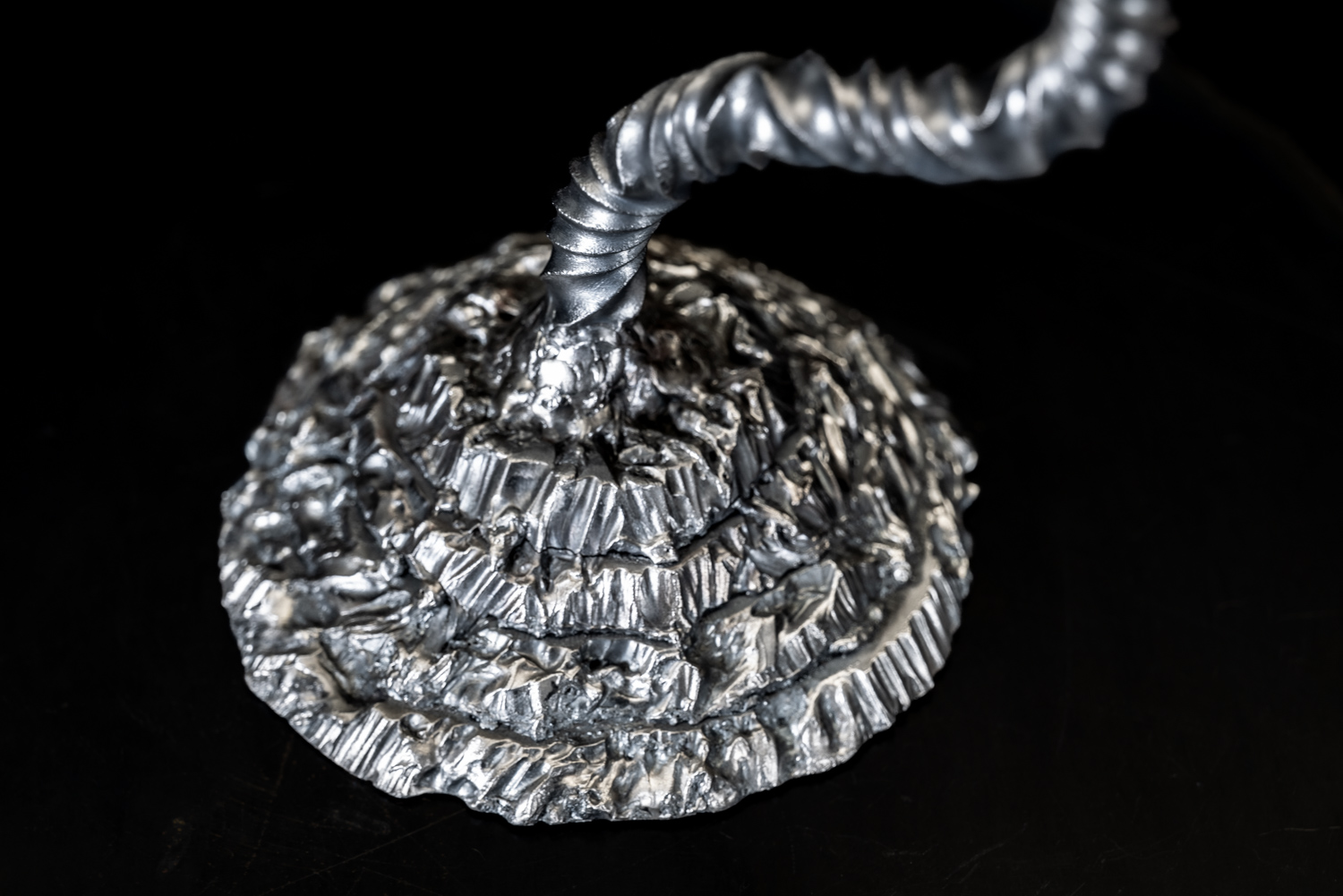
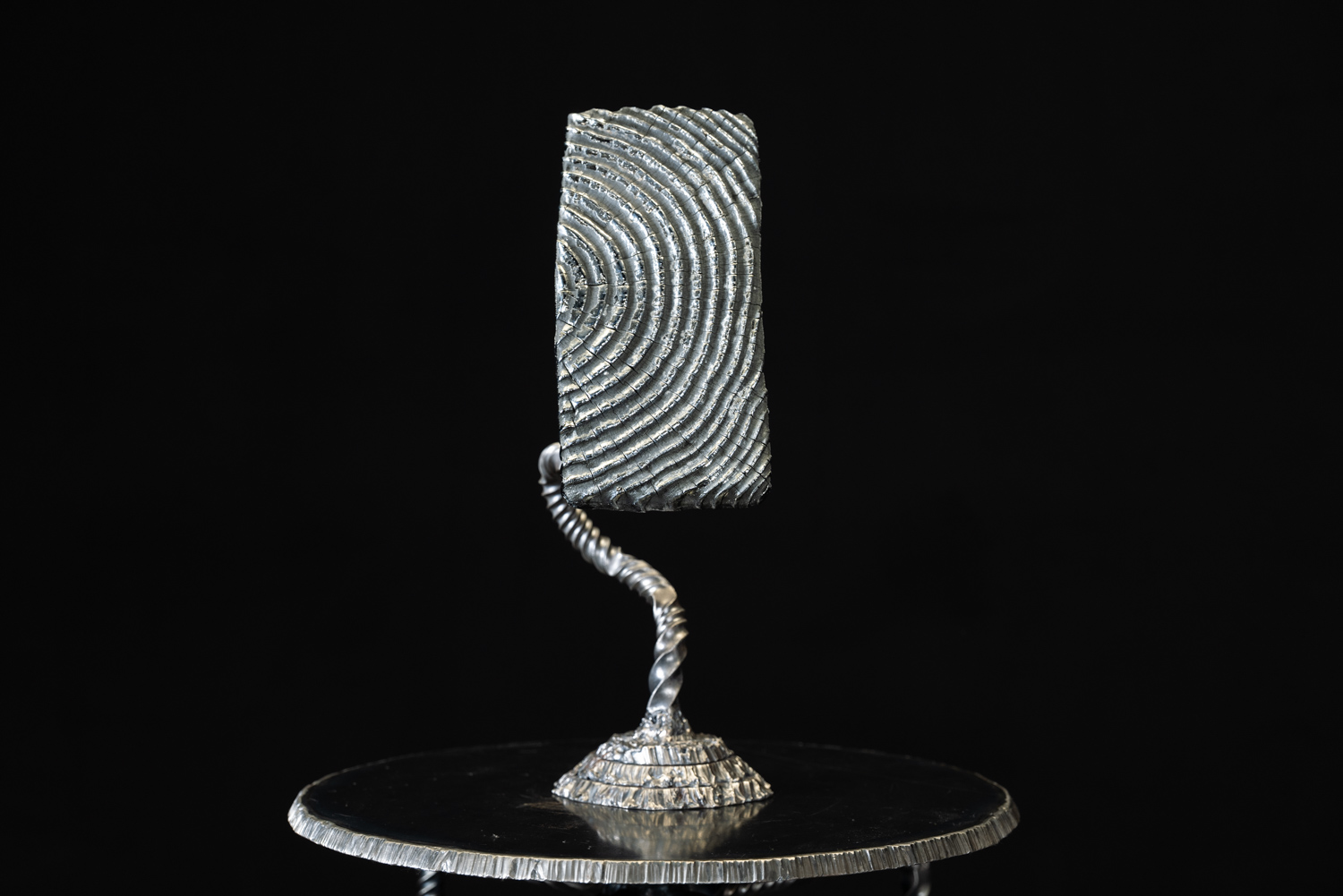
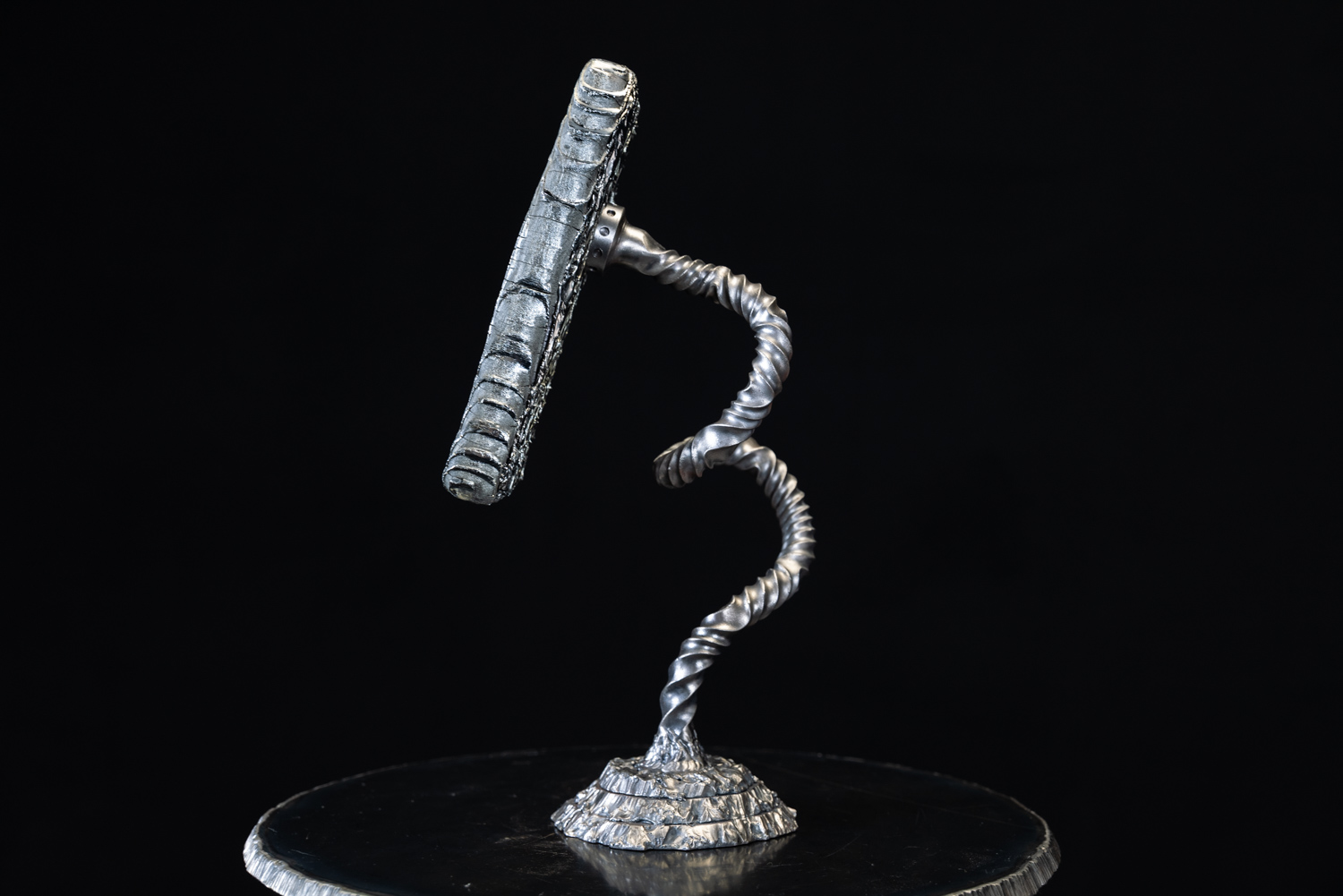
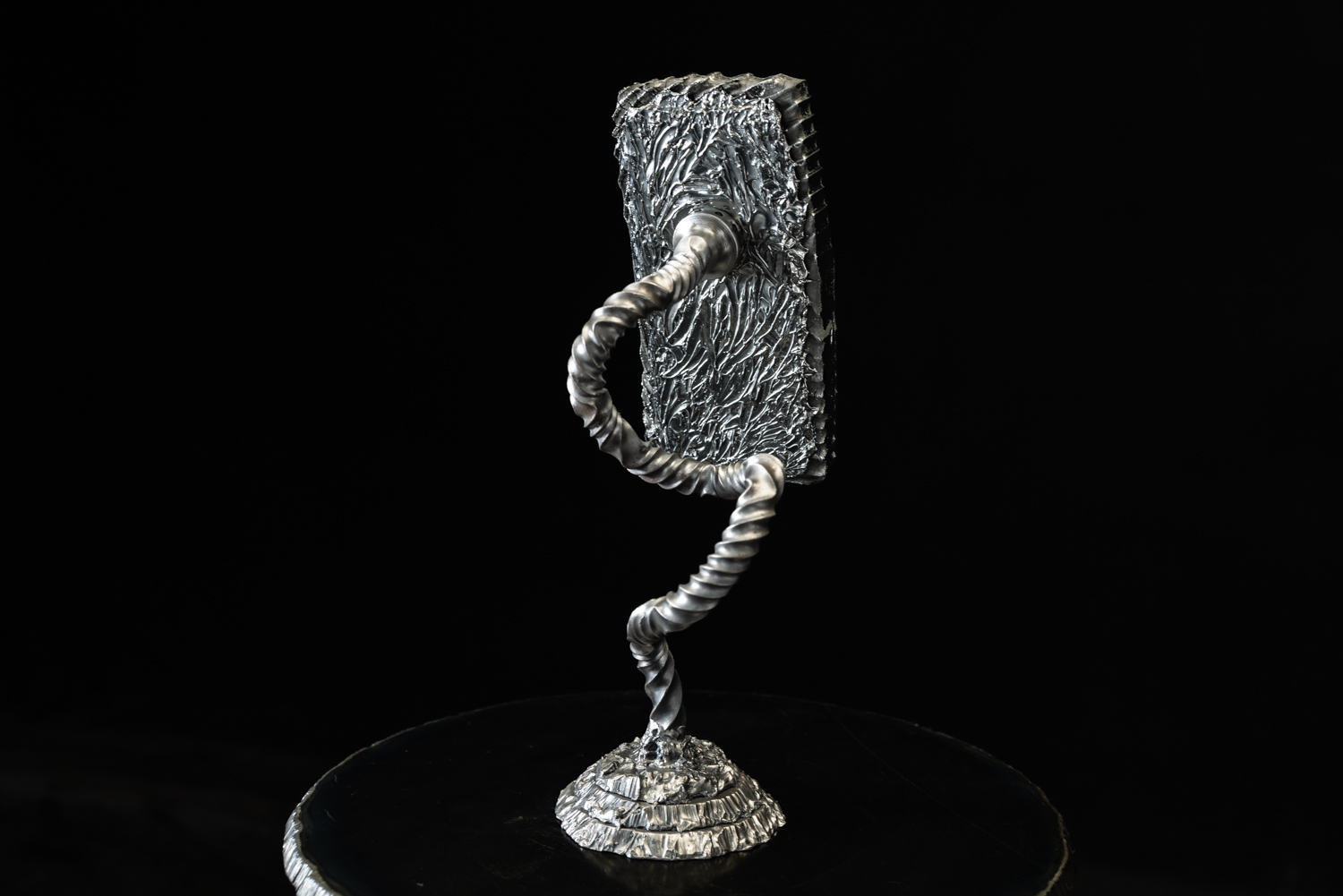
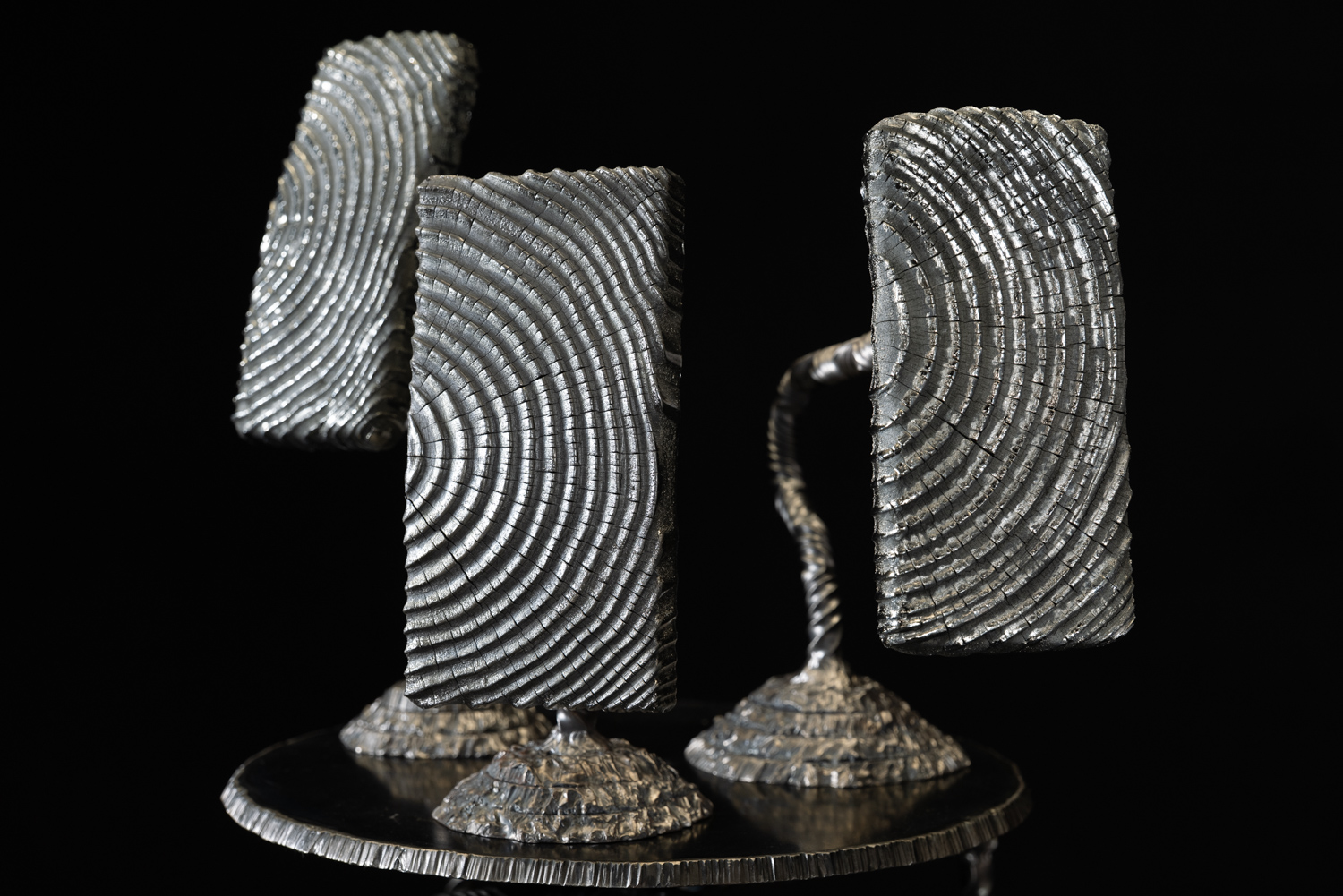
These three works were created when I realized this. All three pieces use cedar planks of nearly the same size. The growth rings carved into their surfaces are traces of the time a single tree lived. The countless lines piling up from the center outward seem to represent time itself. However, the supports holding up these cedar planks are different in all three works.If the boards represent “nothingness,” then the supports represent myself—the one who has faced that nothingness. It is not the nothingness that has changed.
The part of me that gazed into the void changed over the years.
STATEMENT
An Offering to the Void — Junshin
I named the piece that depicts the shortest, quietest, and most beautiful curve *An Offering to the Void—Pure Heart*. It portrays a boy who does not yet know what the void is, yet finds himself strongly drawn to its existence. “Pure Heart” does not mean ignorance. It refers to a heart that has not yet built complex barriers between itself and the world.That summer of my second year of high school, I encountered the immense work *Offering to the Void* and, even without fully understanding its meaning, tried to accept it head-on. I believe there was quiet curiosity there, rather than fear.
STATEMENT
An Offering to Nothingness — Submission
In the second work, the support extends significantly forward. I titled this piece *An Offering to Nothingness—Submission*. “Submission” is not a term that simply means yielding to force. Here, it refers to an attitude toward life in which one recognizes the things one cannot change and learns to live while accepting them. In life, there are events that cannot be controlled by one’s own will alone.
Losing something.
Parting ways.
Growing old.
Falling apart.
And, coming to an end.
Even in the face of such irreversible events, human beings continue to live their daily lives. That pillar stretching straight ahead represents my own self—one who, over the course of that long time, has neither denied nor sought to overcome the void, but has simply accepted it as a fact of existence.
STATEMENT
An Offering to the Void — Redemption
And thirdly, the support bends, twists, and undulates dramatically once more as it extends toward the cedar plank. I titled this work *An Offering to Nothingness—Redemption *. The “redemption” referred to here does not carry only the religious meaning of atoning for sins.It is the act of a person who has lived a long life attempting to confront once more their own past, the things they have lost, the things they have hurt, the things they failed to protect, and the parts of themselves they could not understand.
The support is not a straight line. It changes direction repeatedly, twists, and yet continues to move forward. There is neither the innocence of youth nor the submissive acceptance of mere resignation. What remains is a body that, having come to know nothingness, still strives to live.
STATEMENT
Nothingness
For a long time, I may have viewed “nothingness” as something that existed outside of myself. But now, I no longer think that way. Nothingness does not come from outside. The possibility of loss, the possibility of collapse, and the possibility of an end are all inherent in existence itself from the very beginning. And the mind that fears it, the mind that resists it, and the mind that accepts it—all of these reside within me. That is why I do not intend to overcome nothingness. Nor do I intend to defeat it.I simply stand before it. And I offer up the very time I have lived as an offering. The “nothingness” I encountered that summer when I was seventeen still stands before me now that I am sixty-two. Yet the person looking at it is no longer the person I was back then.
"Purity," "Humility," "Redemption."
These three works do not represent three different forms of nothingness. They are three moments in time for a single person who has continued to gaze upon a single form of nothingness. And perhaps the true offering here is neither the cedar plank, nor the silver, nor the iron.
Even after forty-five years, it is I myself who still stand on the threshold of nothingness.
DETAILS
JOB INFORMATION
VOTIVE
An Offering to the Void